Thursday, July 20, 2017


Monday, May 15, 2017
**URGENT ACTION ALERT** -- 5 Minutes to Help on Gulf War Illness in the SENATE

ACTION NEEDED: Very specific -- Ask your U.S. Senator to sign onto the "Baldwin "Dear Colleague Letter for Gulf War Illness treatment research funding" (FY18)
Friday, May 5, 2017
Online Study of Gulf War Illness Treatments Tried Seeking Participants

The study, composed of a series of online surveys, asks about treatments tried for Gulf War Illness -- not just what has helped, but also what has made symptoms worse.
The study is
Monday, May 1, 2017
Gulf War Illness Study Finds New Evidence of Lipid Dysfunction in Linked Animal, Human data
(91outcomes.com - May 1, 2017) -- A newly published study has found lipid changes and chronic inflammation in a first-ever published study linking data from animal models of Gulf War toxic exposures and Gulf War veterans suffering from Gulf War Illness.
The study, funded by the Congressionally-directed Gulf War Illness Research Program (GWIRP) within the Department of Defense health program, for the first time links data from Gulf War veterans participating in two different Gulf War Illness clinical research studies
Wednesday, April 5, 2017
U.S. House Members resoundingly call for continuation of Gulf War Illness treatment research funding
(91outcomes.com - April 5, 2017) -- Nearly one-fifth of the Members of the U.S. House of Representatives this week resoundingly called for continuation of federally funded Gulf War Illness treatment research. The effort came at the request of Gulf War veterans, supported by ten veterans service organizations and led by Veterans for Common Sense.
INJUSTICE: Why Some Gulf War Veterans are Eligible for the Gulf War medal but not VA's Gulf War Benefits
(91outcomes.com - April 5, 2017) -- For years, there has been confusion surrounding the differences between the Persian Gulf war geographic areas for receipt of the Southwest Asia Service Medal (SWASM) and for purposes of VA benefits.
It has long been rumored that some Gulf War veterans who qualified for the Persian Gulf War service medal (SWASM) don't qualify for VA Gulf war benefits because their service was in Turkey, Syria, Jordan, Egypt, with Patriot missile crews and other U.S. forces and these countries' airspace and territorial waters.
Despite that fact that both the medal and VA's Gulf War benefits are based on service in the same war, it is true that each have different geographic areas to qualify, and that some Gulf War veterans are eligible for the medal but not Gulf War-related VA benefits
Tuesday, April 4, 2017
Changes in Mitochondrial, Immune, and Inflammatory Pathways following Gulf War agent exposures
(91outcomes.com - April 4, 2017) - Newly published study results by researchers at the Roskamp Institute in Sarasota, Fla, have found changes in mitochondrial, immune, and inflammatory pathways following Gulf War agent exposures in an animal model relevant to Gulf War Illness.
In the publication authored
In the publication authored
Thursday, March 30, 2017
BOSTON UNIVERSITY: Identifying Biomarkers of Gulf War Illness
SOURCE: Boston University School of Public Health, by Lisa Chedekel, March 29, 2017
https://www.bu.edu/sph/2017/03/29/identifying-biomarkers-of-gulf-war-illness/
ARCHIVED ARTICLE:
 Twenty-five years after the first Gulf War, scientists still do not know the exact biological mechanisms that are making about one-third of the 697,000 veterans who served in the war sick.
https://www.bu.edu/sph/2017/03/29/identifying-biomarkers-of-gulf-war-illness/
ARCHIVED ARTICLE:
Identifying Biomarkers of Gulf War Illness
Twenty-five years after the first Gulf War, scientists still do not know the exact biological mechanisms that are making about one-third of the 697,000 veterans who served in the war sick.
But a new multi-institution study in the journal Neurotoxicology & Teretology, co-authored by a School of Public Health researcher, provides evidence that Gulf War Illness (GWI) stems from neuronal and glial injury affecting both the gray and white matter cells of the brain, and identifies serum autoantibodies that may prove useful as biomarkers of the illness.
The research team found “significantly elevated levels” of
Friday, March 24, 2017
New research links Gulf War Illness to gastrointestinal disturbances
SOURCE: Press Release, University of South Carolina (EurekaAlerts)
https://www.eurekalert.org/pub_releases/2017-03/uosc-nrl032317.php
ARCHIVED ARTICLE:
PUBLIC RELEASE:
New research links Gulf War Illness to gastrointestinal disturbances
Findings may point to new treatments for elusive disorder
A new study from the University of South Carolina has found a gastrointestinal link that could help explain many of the health issues facing those with Gulf War Illness (GWI) as well as opening new pathways to treatment options that may improve both gastrointestinal and neurological symptoms associated with the disorder.
The research is the first study to link the gastrointestinal disturbances of GWI with changes in the intestinal microbiota. This connection potentially explains both the gastrointestinal inflammation and the neurological abnormalities (e.g., impairments to cognition, memory, learning) that define GWI.
GWI exposures alter the microbiome (i.e., bacterial content in the gut), and the affected microbiota then produce endotoxins,
Thursday, March 23, 2017
Gulf War Illness linked to gastrointestinal disturbances; Findings may point to new treatments for elusive disorder
SOURCE: Science Daily, March 17, 2017
https://www.sciencedaily.com/releases/2017/03/170323125513.htm
ARCHIVED ARTICLE:
https://www.sciencedaily.com/releases/2017/03/170323125513.htm
ARCHIVED ARTICLE:
Gulf War Illness linked to gastrointestinal disturbances
Findings may point to new treatments for elusive disorder
- March 23, 2017
- University of South Carolina
- A new study has linked gastrointestinal disturbances in those suffering from Gulf War illness with changes intestinal microbiota. The findings open up new treatment options that may improve both gastrointestinal and neurological symptoms among soldiers and veterans.
Research links Gulf War Illness to gastrointestinal disturbances and uncovers pathways to how this condition causes neuroinflammation
SOURCE: University of South Carolina, Arnold School of Public Health, March 23, 2017
https://www.sc.edu/study/colleges_schools/public_health/about/news/2017/gwi_study.php#.W-8h9C2ZPOR
****
ARCHIVED ARTICLE:
https://www.sc.edu/study/colleges_schools/public_health/about/news/2017/gwi_study.php#.W-8h9C2ZPOR
****
ARCHIVED ARTICLE:
Research links Gulf War Illness to gastrointestinal disturbances and uncovers pathways to how this condition causes neuroinflammation
March 23, 2017 | Erin Bluvas, bluvase@sc.edu
A team of researchers* led by Associate Professor of Environmental Health Sciences (ENHS) Saurabh Chatterjee have published the first study to link the gastrointestinal disturbances (e.g., bloating, flatulence, indigestion) of Gulf War Illness (GWI) with changes in the intestinal microbiota. This connection potentially explains both the gastrointestinal inflammation and the neurological abnormalities (e.g., impairments to cognition, memory, learning) that define GWI.
GWI exposures alter the microbiome (i.e., bacterial content in the gut). The affected microbiota then produce endotoxins, which pass through a thinned lining of the gut (i.e., leaky gut) and into the blood where they circulate throughout the body. These compounds trigger an inflammatory response that, in turn, initiates several neurological abnormalities commonly observed in GWI. These findings open up new treatment options that may improve both gastrointestinal and neurological symptoms among soldiers and veterans with GWI.
Tuesday, March 21, 2017
Thursday, March 16, 2017
New CDMRP Study Finds More Evidence of Neuroinflammation, injury in Gulf War Illness
(91outcomes.com - Mar. 16, 2017) - A new study released this week ahead of publication shows further evidence of neuroinflammation and injury to the cells of the brain, neurons, following Gulf War toxic exposures. The study also confirmed the continuing presence of gliosis, nonspecific evidence of injury to the brain or spinal cord and commonly found in other neurological diseases.
Tuesday, March 14, 2017
Tuesday, February 28, 2017
CDMRP-Funded Study Tests Potential Treatment to Combat Gulf War Illness
This new study was funded by the treatment-focused Gulf War Illness Research Program (GWIRP), part of the Congressionally Directed Medical Research Program (CDMRP) funded by Congress within the U.S. Department of Defense.
Monday, February 13, 2017
GWI Treatment Development Study Seeking Gulf War veterans in Florida
A Gulf War Illness treatment development research study in Sarasota, Florida, is seeking 1991 Gulf War (Desert Storm) veterans to participate.
The study takes only three to four hours in a single visit to complete, and nominal compensation of $35 is provided to study subjects who complete the short study.
The study takes only three to four hours in a single visit to complete, and nominal compensation of $35 is provided to study subjects who complete the short study.
Saturday, December 31, 2016
COURTHOUSE NEWS: AZ Police to Face Claims in Death of Gulf War Veteran
SOURCE: Courthouse News, Jamie Ross reporting, Dec. 30, 2016
http://courthousenews.com/arpaios-officers-must-face-claims-in-death-of-veteran/
ARCHIVED ARTICLE:
http://courthousenews.com/arpaios-officers-must-face-claims-in-death-of-veteran/
ARCHIVED ARTICLE:
Arpaio’s Officers Must Face Claims in Death of Veteran
PHOENIX (CN) – The Ninth Circuit ruled Friday that Maricopa County Sheriff Joe Arpaio’s detention officers must face excessive-force claims in the death of a mentally ill Army veteran.
The officers asked a three-judge panel of the Ninth Circuit last month to grant them qualified immunityfrom a wrongful death lawsuit filed by the family of Ernest “Marty” Atencio, a 44-year-old Gulf War veteran
Monday, December 19, 2016
AMERICAN LEGION COVER STORY, Jan. 2017: Gulf War Illness
American Legion - January 2017 Cover story - Gulf War Illness by Anthony Hardie on Scribd (scroll for additional pages, resources, and related story)
****
SOURCE: American Legion National Magazine, January 2017, by Ken Olsen
https://www.legion.org/magazine/235290/nothing-wrong-you
ARCHIVED ARTICLE:
Friday, December 2, 2016
VA: Studies point to gene-based glitches in ill Gulf War Vets
SOURCE: U.S. Department of Veterans Affairs, November 10, 2016
http://www.research.va.gov/currents/1116-3.cfm
ARCHIVED ARTICLE:
http://www.research.va.gov/currents/1116-3.cfm
ARCHIVED ARTICLE:
Key findings
Studies point to gene-based glitches in ill Gulf War Vets
November 10, 2016
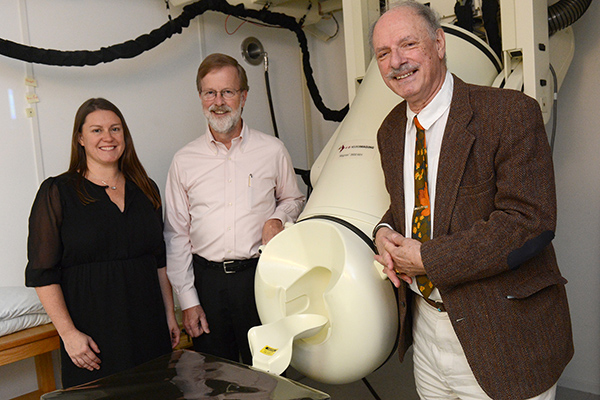
(From left) Drs. Lisa James, Brian Engdahl, and Apostolos Georgopoulos (director) are with the Brain Sciences Center at the Minneapolis VA. They are seen here next to the center's MEG scanner. (Photo by April Eilers
Twenty-five years ago, Brian Zimmerman was a strong 6-foot-1 inch, 185-pound Army infantryman in prime physical condition fighting Iraqi forces in Operation Desert Storm.
He witnessed charred Iraqi bodies on the "Highway of Death," including a dead child, took part in a tank battle, and was close to an Iraqi ammunition depot called Khamisiyah that upon detonation is believed to have released nerve agents such as sarin and cyclosarin in the direction of U.S. troops.
Today, Zimmerman, 45, is still entrenched in a battle, but one worlds apart from his military days. He's one of the estimated 300,000 Veterans with Gulf War illness (GWI), which affects various
Subscribe to:
Posts (Atom)