Monday, September 27, 2010

Blogging about Gulf War illnesses: Sleep Issues


Written by Anthony Hardie

(91outcomes.com) – One of the top health complaints of veterans of the 1991 Gulf War has been sleep problems, including unrefreshing sleep.

What is unrefreshing sleep?  Normally, sleep refreshes and rejuvenates the body.  After a normal sleep period, typically between seven and nine hours, we awake and feel new again, ready to take on the new day.  But for us Gulf War veterans, sleep is disturbed and dysfunctional, often in many different ways.

I couldn’t decide which of several areas to focus on for this third article in a fairly personal series on Gulf War illnesses.  However, after waking up at 5 a.m. and realizing I’ve slept for about 27 of the last 30 hours, I thought one on sleep might be well timed. 

In short, his column will attempt to explore sleep dysfunctions, their diagnoses, and potential treatments to help with the sleep symptoms that are so commonly reported among us Gulf War veterans.

MYRIAD OF SLEEP ISSUES

Sleep problems among war veterans are almost a proverb.  Post-Traumatic Stress Disorder (PTSD), with its hypervigilance, excessive watchfulness, depression, anxiety, and dreams of re-experiencing traumatic events, is well known for disturbing sleep.  However, for many Gulf War veterans suffering from Gulf War illnesses, PTSD is not the reason for their sleep disorders and disruption in the majority of cases.  PTSD almost certainly compounds underlying Gulf War Illness-related sleep problems in those who suffer from both GWI and PTSD.

Poor quality sleep can result in increased widespread pain, worsened immune function, headaches, irritability, confusion, forgetfulness, difficulty concentrating, worsened bowel and digestive symptoms, and more.

Not getting proper restful sleep can lead to a vicious feedback cycle as well, with worse sleep leading to worsened symptoms, worsened symptoms resulting in worsened sleep, and so on.  Breaking the cycle by getting better sleep can be the key.

Sleep issues, including some of those discussed below, can also be features of other neurological diseases that are reportedly more common in Gulf War veterans, including MS (multiple sclerosis) and ALS (amyotrophic lateral sclerosis). 

And with the current wars in Iraq and Afghanistan, there has been a growing understanding of the long-term effects of damage to the brain by concussive and blast injuries.  Traumatic, or mild traumatic brain injury (TBI, mTBI) has been called the signature wound of the current wars, but despite being only newly recognized, certainly affected some veterans of previous wars as well, including the 1991 Gulf War.  

PTSD and Sleep.  While PTSD rates among veterans of the 1991 Gulf War are relatively low, especially when compared to PTSD rates from other wars, PTSD still does exist among somewhere around nine percent of veterans of the 1991 Gulf War.  That’s less than half the estimated rate among Vietnam War veterans and less than a third the estimated rate of PTSD among Iraq War veterans.

Among the PTSD-related symptoms of sleep disturbance are difficulties falling and staying asleep.  These are often related to the subtle or not so subtle anxiety surrounding worries or concerns of another night of terrible dreams.  The National Center for PTSD has a good list and description of PTSD-related sleep problems. 

One of the primary symptoms of PTSD is avoidance – avoidance of reminders of the myriad of sights, sounds, smells, tastes, sensations, emotions, and feelings that existed during and around each traumatic event.  Compounding PTSD for war veterans is the reality that there are likely many traumatic events, not just one.  Veterans with PTSD can be plagued for a lifetime with dreams – fully remembered, half-remembered, remembered only for a flash of a moment after violently waking up upset, angry, or even fighting -- in which one or more of the sights, sounds, smells, tastes, sensations, emotions, or feelings related to the many traumas are experienced yet again during sleep. 

The mind can be very creative during sleep, continually inventing new dream scenarios that always end up in the same situation, the same place, or are otherwise related to the original traumas.  Not surprisingly, all of this can lead to a conscious or unconscious avoidance of going to sleep. 

And, once asleep, PTSD symptoms and dreams can severely disrupt sleep, not allowing the body to get into the deep levels of sleep required for the body to feel refreshed upon waking.  My sons tell me they often find me sleeping on the couch with one eye open and one eye closed. 

Sleepwalking can be common among veterans with PTSD as well, as well as physically attacking shadows or other dream remnants across the room or down the hall.  I wonder how many other combat veterans have unintentionally punched or otherwise attacked their bed partner, fully believing them to be the enemy until your fist connects and you wake up, embarrassed, ashamed, and more. 

In one of my more memorable PTSD-related nightmares, I jumped up from my bed to kill an attacker that I fully believed I saw, screaming obscenities at him while chasing him around the corner.  I fully awoke after I ran into a bookshelf and wound up knocking down some glass bottles, stepping on the broken glass, and cutting my feet.  I can only imagine what my poor college roommates thought from their room next door after hearing all the commotion and coming out into the hallway to see bloody footprints leading into the closed bathroom door, behind which I was angrily plucking broken glass from my feet.

Obviously, falling back asleep after night issues like these is not easy, but when you’ve got work or class the next day, you have to get rest, and that can be very difficult.  And for veterans like me who deal with both PTSD and GWI, it is all that more challenging.

“Coming back down” can be very difficult for veterans with PTSD who get into an elevated stated, regardless of whether they got into the elevated sleep from triggers while awake or while asleep.  And I continue to believe that there’s a component of not being able to “come back down” that’s also related to GWI.

I’ve described it like this:  imagine if someone comes up behind you and severely startles you and causes you to “jump.”  Now, hold onto that feeling of how it feels when you’re severely startled, and imagine that you feel that way constantly, day and night, for a couple weeks at a time.  Whether the cause is PTSD, GWI, or both, that’s clearly a recipe for very bad sleep and the slew of negative effects that come from poor sleep.

GWI Brain Damage and Sleep.  Many scientists now believe that a variety of chemical exposures permanently damaged the brain and resulted in long-term dysfunction of the “automatic” parts of the body’s functioning, called the autonomic nervous system.  Among the functions that appear to be left disturbed are breathing, heart rate, sleep, digestion, and more.

This autonomic dysfunction can affect sleep in many ways.  Unusual changes in heart and breathing rates might affect natural sleep cycles.  Digestion, which usually slows down during sleep, might be altered and affect sleep. 

Breathing during sleep can simply stop because of dysfunction in the brain’s controls, the tongue or throat relaxing and collapsing and partially or fully blocking breathing, or a combination of the two.  This cessation of breathing for short periods or until you wake and gasp for air is called apnea.  Not getting enough oxygen, without actually stopping breathing, is called hypopnea.  Apnea caused by brain dysfunction, in which the brain “forgets” to breathe while sleeping, is called central sleep apnea, while apnea caused by anatomical blockage is called obstructive sleep apnea.  Have both at the same time?  That’s called mixed sleep apnea.

Ever wake up gasping for air?  That might just be sleep apnea.  Wake up with headaches, feeling groggy, and find yourself falling asleep during the day?  That might also be sleep apnea.

Respiratory Issues and Sleep.  In the first column in this series, I wrote about the variety of respiratory and sinus issues that affect many Gulf War veterans, including me.  Obviously, untreated or inadequately controlled respiratory issues, respiratory infections, and sinus infections can affect sleep. 

Mucous from sinus infections – which appear to be more common among us Gulf War veterans that other veterans -- may make obstructive sleep apnea more likely, especially if there’s mucous drainage down the throat when sleeping.

G-I issues and Sleep. Gastrointestinal issues can cause worse sleep as well.  From gas and other bowel pain, to chronic diarrhea, to waking in the middle of the night with an intense urge to defecate, symptoms related to irritable bowel syndrome (IBS), Crohn’s disease, and functional bowel disorders can have a negative impact on sleep and lead to the vicious feedback cycle described earlier. 

From personal experience, a subtle and often missed diagnosis for sleep and respiratory issues is Gastro-Esophageal Reflux Disease.  While we’ll cover GERD in more detail in a future column, if you wake up choking, you might be suffering from GERD, with liquid or other stomach contents trickling up your throat and into your airways while you’re sleeping. 

Relaxation or dysfunction of the lower esophageal sphincter, which opens to let food and fluids into the stomach and is supposed to otherwise remain closed, can lead to the most severe GERD symptoms and follow-on issues and could be related to the brain dysfunction believed to be at the root of Gulf War Illness.  In my case, it was so severe that before effective treatment I would wake up regularly choking on stomach acid – not only unpleasant but dangerous on several levels – or clawing at the air for oxygen. 

Controlling G-I symptoms and getting good quality sleep are key.  We’ll discuss G-I issues in more detail in a later column about Gulf War illnesses.

Night terrors.  There’s still a lot of debate about the nature of night terrors – waking up feeling terrified or severely agitated but with no memory of a bad dream.  They could be related to PTSD, or severe GERD, or apneas and not getting enough oxygen.   Some research even suggest link between night terrors and hypoglycemia (low blood sugar).  What is clear, however, is that night terrors severely disrupt sleep and can make it difficult or impossible to go back to sleep.  And, they can be upsetting for your bed partner as well, particularly if you wake up screaming, shouting, or swinging. 

SOLUTIONS FOR SLEEP ISSUES

Clearly there are many potential causes for sleep issues in Gulf War veterans.  The good news is that there are quite a number of possible treatments for sleep issues.  Used in combination, they can genuinely improve quality of life.  I know for me that they have.  Currently, there’s no “cure” for Gulf War illnesses and scientific understanding is only just beginning to get at the root of the issues, but I hope that some or several of the following are as helpful to you as they have been for me.

Practice Good Sleep Hygiene.   Breaking bad sleep habits not just learned but ingrained in the military can take a lot of time and effort.  Those include sleeping not at a regular time but whenever you can; pgulf13.jpg image by jpeters_photosiecing together sleep throughout a 24-hour or longer period; learning to sleep with one eye (or ear) open to remain watchful for the enemy; never getting a full night’s sleep; waking up for guard duty or other night-time tasks, then having to go back to sleep for an hour, two, or three afterwards; overuse of caffeine and other stimulants; performing all daily tasks  like eating, reading, watching a DVD, cleaning your weapon on the same cot, bunk, mat, or vehicle where you sleep because it’s the only home you have.  But in order to correct these and other issues, first, you need to know what to do.
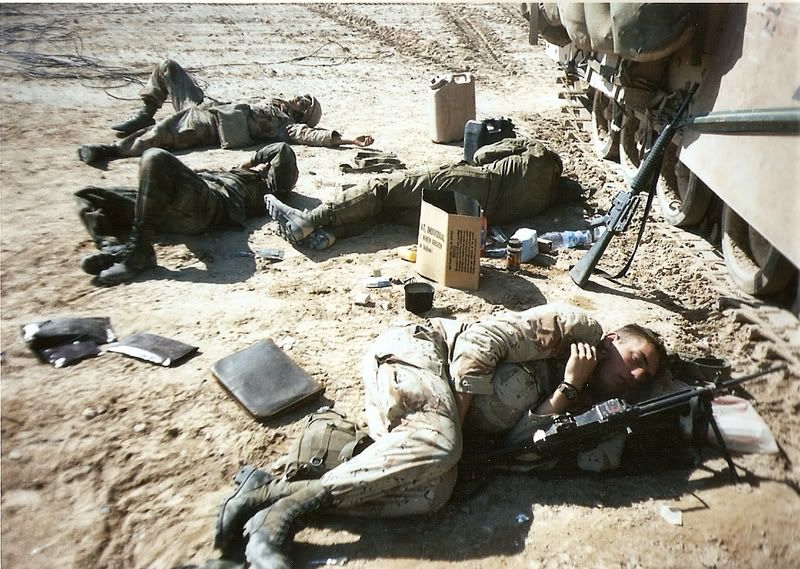
Sleep hygiene means controlling all the elements and aspects of your sleep environment, your sleep, and how they interrelate.  Good sleep hygiene is also easy to do and doesn’t require any special equipment or training.  After years of personal experienced, I believe that practicing good sleep hygiene should be first and foremost in any effort to improve sleep quality. 

Here are some good recommendations from the National Sleep Foundation (http://www.sleepfoundation.org/article/ask-the-expert/sleep-hygiene) and the American Academy of Sleep Medicine (http://www.sleepeducation.com/Hygiene.aspx). 

See a sleep medicine professional.  I’ve found that a lot of Gulf War veterans have no idea that sleep medicine specialists exist, let alone that they are common within the VA medical system.  Get a referral to one from your primary care physician and see what they can do to help.

Treat Pain.  Effectively treating pain is also critically important in order to be able to fall and remain asleep.  Recognize that some pain medications may provide sleep, but not necessarily provide restful or refreshing sleep.  Studies have shown, however, that most paradoxically, however, getting good quality sleep may actually help relieve some pain, particularly in veterans with fibromyalgia and chronic widespread pain.  My own experience has proven this to be true as well, at least for me, so maybe getting better quality sleep will work for you, too in helping manage chronic widespread pain. 

Treat PTSD, anxiety, and depression.  All of these can have severe, negative effects on sleep, including falling and staying asleep, feeling well rested, or even sleeping too much and waking up feeling awful.  Some medications for treating these conditions can also affect sleep, either positively or negatively.  Be sure to talk candidly with your health care providers to be sure you’re getting just the right medications, doses, and in the right combinations.

Treat other health issues.  It is of key importance to treat other health symptoms, including respiratory, sinus, gastro-intestinal, and other diseases, illnesses, and symptoms.    As mentioned above, and will be discussed in a future column on G-I issues, untreated or poorly controlled GERD can lead to severe sleep disruption and damage to the lungs, airways, esophagus, and more.

Exercise.  Getting good exercise is an important component to getting good quality sleep.  However, for Gulf War veterans like me, exercise helps reduce chronic widespread pain but worsens chronic fatigue, so exercise and rest become more of a delicate balancing act.

Mindfulness, Muscle Relaxation, and Deep Breathing Training .   All of these used together can have a significant positive effect on getting to sleep and getting back to sleep after awaking after whatever kind of sleep episode.  I learned about deep breathing exercises, deep relaxation, and mindfulness from a health psychologist to which the VA sent me (contracted via fee basis) for pain control and coping with the awfulness of new total disability.  Here’s an excellent write-up about these: (http://www.helpguide.org/mental/stress_relief_meditation_yoga_relaxation.htm).  While I don’t yet practice Yoga or Tai Chi, there’s a lot of evidence that suggests these are very good for improving sleep and controlling pain as well. 

Take Appropriate Sleep Medications.  After trying all of the above, if you’re a Gulf War veteran like me, you might still have serious sleep issues.  Thankfully, there are a number of medications that can help.

In general, I have found that over the counter sleeping pills make me feel much worse after only a night or two.  While they can certainly help you to fall asleep, they don’t always provide the best quality sleep, which can lead to the negative sleep cycle discussed earlier, making pain and other chronic symptoms worse.  Antihistamines like Benadryl can be used in a quick fix to fall asleep, but can lead to next day “hangovers” of grogginess and other symptoms.

Your doctor might consider prescribing low-dose anti-anxiety medications like Xanax or Valium, thought they should be used very carefully and exactly as prescribed -- using these on a daily basis can lead to tolerance and worse.  Anti-seizure and anti-depressants can also have effects on sleep that are desirable for people with sleep disorders and symptoms. 

Seroquel, an anti-psychotic medication prescribed for a host of “off-label” uses is often given for sleep issues.  For me,  at low doses (50 mg) it’s definitely my all time favorite because it allows me to get good quality, restful sleep and even to dream again after years of dreamless, fitful sleep. 

While they might not be able to cure you, the Sleep or Mental Health clinics can help with prescribing medications to help you fall asleep, stay asleep, and get better quality, restorative, restful sleep. 

CPAP.  A machine to help in breathing while sleeping, called a CPAP (continuous positive airway pressure), has been found to help a lot with obstructive and mixed sleep apnea, fibromyalgia, and some neuromuscular diseases.  The CPAP consists of a base unit plugged into the wall with a breathing tube attached.  The CPAP blows air at a constant pressure, helping to ensure continued breathing during periods of breathing stoppage (apneas or hypopneas).

A recent study of Gulf War veterans suffering from chronic multi-symptom illness suggests that the use of a CPAP machine can help alleviate many symptoms, including not only feeling unrefreshed after sleep, but also chronic widespread pain, muscle and joint pain and weakness, irritable bowel issues, debilitating fatigue, and immune dysfunction and related chronic infections.

And, there have been enough studies of the use of a CPAP to help relieve the chronic widespread pain of fibromyalgia that VA will now prescribe a CPAP machine for those diagnosed with fibromyalgia, a presumptive condition for service-connection for Gulf War veterans. 

Let’s be candid:  trying to fall and stay asleep with a plastic mask or piece in your nose or over your mouth and nose (depending upon the model your doctor provides you) is challenging for healthy people.  Hearing the hum of the machine and hearing your breathing louder and more raspy than normal are not easy to get used to either.  Add in abnormal difficulties in falling and/or staying asleep, and getting used to wearing the breathing portion of the CPAP is not going to be easy. 

I’ve got a very nice electronic CPAP provided by my VA sleep clinic.  It even integrates distilled water (you have to fill it manually) to help prevent the mouth, throat and nose dryness associated with older CPAP models.  I’ll be the first to admit that it’s just very difficult to adapt to using it, but I’ll keep trying and encourage you to do the same because the science suggests that it really can help with many of our worse symptoms.

As one sleep apnea blogger puts it, think of it as snorkeling while you sleep!

SUMMARY

At the end of the day, getting good quality sleep that is restorative, refreshing, and of sufficient duration and quality can be very difficult.  However, starting with improved sleep hygiene, consulting with a sleep medicine professional, and controlling pain and other symptoms are all critically important components. 

Without adequate, good quality sleep, a negative downward spiral can result that makes everything much worse, particularly chronic pain.  With worse physical and mental health symptoms, even worse sleep results, and the down the negative feedback spiral goes.

Lifestyle changes might even be required, like using a CPAP. But remember, lifestyle and medication changes are just a small price to pay for still being alive after our combat experiences.  To be candid, implementing them properly may not result in us returning to 100 percent functionality, but can result in having a decent enough quality of life to enjoy our loved ones and to continue to contribute or otherwise find enjoyment in still living. 

Good luck, and God bless.

-Anthony

Friday, September 24, 2010

New Initiative Seeks to Educate Consumers, Providers about Safe Use of Pain Therapies


Written by the American Pain Foundation

(APF.org) - The American Pain Foundation (APF) is proud to launch PainSAFE™ (Pain Safety & Access For Everyone), a new initiative that educates people with pain and health care professionals about the appropriate and safe use of pain management therapies in an effort to reduce risk and improve access to quality pain care. 

What is PainSAFE?

PainSAFE is a web-based initiative that offers up-to-date information, practical resources and tools to inform consumers about pain treatment options and their safe use. It also includes a central hub of evidence-based information and practice-based tools for health care providers. PainSAFE was created with input from expert advisors, people living with pain and allied organizations to address safety related to all pain management therapies. The content of PainSAFE will continue to evolve and adapt as scientific and policy research uncovers new findings about pain treatment and safety and the real-world effects of recommended approaches.

How can PainSAFE help you?

Patient safety is a pressing health care challenge that affects millions of people. Pain management therapies provide significant benefits to people with pain but no treatment option – including the decision not to treat pain – is without risk.

PainSAFE can empower and educate both consumers and health care providers about the safe use of pain management therapies, thereby helping to reduce risk and improve access to quality pain care.

Learn more about PainSAFE

Visit PainSAFE at www.painsafe.org to explore the information and resources available to you. Spread the word. Share this with your family members, friends and your pain management team members.

Tuesday, September 21, 2010

Blogging About Gulf War Illnesses: Neurological Issues and Treatments

Some of the best recent science has shown us that there may be common causes underlying the complex symptoms of Gulf War veterans’ illnesses, and those causes very likely involve the brain and neurological system.

Among the scientific studies that I have found to be particularly compelling have been those that suggest that various Gulf War exposures led to subtle brain and nervous system damage in Gulf War veterans, which, in turn, has led to dysfunctions of the autonomic nervous system, that controls such “automatic” bodily functions as the heart rate, breathing, digestion, salivation, perspiration, sexual functioning, and sleep regulation.

In short, many scientists now believe that Gulf War Illness is its own separately diagnosable condition, distinct from MS and lupus and even from nearby cousins fibromyalgia, chronic fatigue syndrome, and irritable bowel syndrome. Others still disagree. However, what’s important is that many scientists have found neurological symptoms in ill Gulf War veterans than can be treated and even if not completely reversed, at least mediated and made more bearable.

Recognizing Gulf War Illness as a separate and distinct neurological condition, caused by chemical damage to the brain and resulting in diverse neurological, autonomic nervous system, and immunological symptoms, is by far the most plausible and most comprehensive explanation I have seen in all the years I’ve been active on Gulf War illness issues. 

This article is divided into four parts after this introduction, including the probable damage caused by certain Gulf War exposures, neurological tests and symptoms, what works, and what to avoid.

Because this article is already so long, I plan to cover sleep, stress management, deep breathing, digestion and gut issues later in separate columns.  Your comments below this article are always welcome, particularly those about your own experiences of what works and what doesn’t.

----------------------------------------------------------

Part 1: Acetylcholine, Gulf War Exposures, and Brain Damage. I have found it to be of particular interest and plausibility in these theories that a brain and nervous system chemical called acetylcholine, a primary transmitter of nerve impulses in the autonomic nervous system, was and continues to be affected by one or more common Gulf War exposures.

Remember the little white pills so many of us Gulf War veterans took after the war began, the ones that we were told were experimental and unapproved by the FDA but which we were required to take anyway? Those Pyridostigmine Bromide (PB) pills we Gulf War veterans took were sometimes also called Nerve Agent Protective Pills, or NAPP’s. The primary purpose of constantly taking PB during the Gulf War was to disrupt the production of acetylcholine and improve our chances of survival after a nerve agent attack when used in combination with our 2-PAM chloride and atropine injectors that we carried everywhere as part of our basic uniform, right along with our protective gas masks.

However, without even discussing the long-term effects, taking the PB pills had immediate negative effects on many of us, and so much so that we remember them 20 years later. In my own hastily unit of 35 or so guys that constituted our hastily pulled together liaison team, roughly two-thirds or so of us showed or talked about negative side effects we were having from the PB pills while we were taking them, which we were told would mimic mild effects of nerve agent poisoning and which they did. Among those effects were: Runny nose; Watery eyes; vision changes; drooling and excessive sweating; cough; chest tightness; more rapid breathing; diarrhea; confusion; drowsiness and fatigue; weakness; headache; nausea, vomiting, and abdominal pain. Some of us had all the symptoms, some only a few, some were affected badly with substantial weight loss and being laid up on bed rest while others were affected only a little.

Meanwhile, a number of important scientific studies since the Gulf War have helped unravel the short- and long-term effects of PB pills, both alone and when taken in combination with being exposed to the military-strength pesticides that were so common among Gulf War troops. Those pesticides we Gulf War troops used as protection against sand flies, mosquitoes, and other biting insects, included permethrin, which was supposed to be sprayed on our uniforms to saturate them with insecticide but which we sometimes sprayed right onto our bodies as wells as our tents, sleeping bags, mosquito netting, and in our vehicles. It also included DEET, a commonly used insect repellant contained in “Off” insect sprays but which we Gulf War troops used in incredibly high concentrations all the time. Recent research has shown DEET to be an inhibitor of the key brain chemical acetylcholinesterase even on its own.

And, at least one scientific study has shown that while PB pills might improve survivability after an attack using Soman, one of the more common chemical warfare agents in the Gulf War era Iraqi arsenal, the use of PB actually heightens the negative health effects of Sarin, another common Iraqi chemical warfare agent to which an estimated 100,000 U.S. troops were exposed at low levels following the post-war demolition of chemical and other munitions at an Iraqi weapons storage depot at Khamisiyah, Iraq in March 1991. Soman, Sarin, and a close cousin of Sarin called Cyclosarin all also negatively impact the brain and nervous system, including affecting the production and reception of acetylcholine in the autonomic nervous system.

What is also significant is the result of studies that have shown that while PB does not normally cross the brain-blood barrier, stress can allow it to cross over into the brain with short- and long-term effects that are only in the early stages of being discovered.

To show how seriously many in the scientific research world are now taking this PB and PB-pesticide connection to Gulf War veterans’ illnesses, a 2008 U.S. government report by the Congressionally-chartered Research Advisory Committee on Gulf War Veterans’ Illnesses shook the scientific world when it identified PB-pesticides as the leading probable cause for most Gulf War veterans’ chronic multi-symptom illness – though the report did not rule out a number of other hazardous exposures as having caused other conditions prevalent or potentially prevalent among Gulf War veterans.  The panel is composed of some of the top scientists in their fields from the U.S. and UK, including a former elected head of the American Association for the Advancement of Science, the head of neuro-toxicology for the U.S. Centers for Disease Control (CDC), the head of the UK’s center for chemical warfare research, and many others.   In short, these are not scientific lightweights, off-beats, or self-serving quacks by any stretch of the imagination -- which have all too often been the scourge of the Gulf War veteran community.  The collective opinion of these leading scientists, rooted in countless scientific studies, represented a true and major breakthrough for Gulf War veterans suffering from Gulf War Illness. 

Of interest to Gulf War era troops who did not deploy, these highly concentrated pesticides have more recently been shown to be dangerous were used commonly throughout the military at the time. This fact might help explain why some non-deployed Gulf War ere troops report long-term symptoms similar to some Gulf War veterans.

The damage caused by these acetylcholinesterase inhibiting agents is only just beginning to be understood by science. I’m most encouraged by many of the scientists involved who suggest that this new understanding may very well lead to treatments that might help.


----------------------------------------------------------

Part 2: Neurological tests and Symptoms. Meanwhile, here are some of the neurological effects I’ve experienced since the Gulf War, whatever the cause, that are common to many of us Gulf War veterans.

· Chronic, debilitating fatigue. This was one of the earliest symptoms, which began while I was still in the Gulf and was first taking the PB pills. However, we had a lot of exposures during the Gulf so accurately attributing the overwhelming fatigue to any one or any set of them is difficult. Chronic Fatigue Syndrome (CFS) is another presumptive condition for Gulf War veterans. Like so many other Gulf War veterans, the fatigue is overwhelming to the point of being all-encompassing and is impossible to overcome. Fatigue is difficult to measure, but there are a number of fatigue scales that can be used.  Some scientists and medical doctors believe that the chronic, debilitating fatigue in Gulf War Illness is separate and distinct from CFS, and a number of current studies will try to tease that distinction out as part of their various aims.  And in the last year, a virus called XMRV has been identified in people with CFS which might be the cause of their chronic fatigue symptoms.  If any of this turns out to be true, then treatment for Gulf War veterans might be  the same or different than for those with CFS. 

· Chronic muscle and joint weakness. This has been getting progressively worse over time. After the Gulf War, even though I was only in my early- to mid-20’s, I began experiencing my knees and legs just giving out. Muscle and joint weakness are commonly reported symptom among Gulf War veterans with chronic multi-symptom illness, as well as in veterans in general, and this is one area that’s harder to tease out from the long-term symptoms of excessive wear and tear on our joints and muscles from our military experiences.   Over time, I’ve had more and more difficulty with walking, a commonly reported neurological or arthritis-based complaint among many Gulf War veterans.

· Chronic widespread pain. In many Gulf War veterans, our chronic widespread pain has been given the diagnosis of Fibromyalgia, which is a presumptive condition for service-connection for us Gulf War veterans. For me, this is in the muscles, tendons, joints, and spine. Fibromyalgia has traditionally been diagnosed through a pressure-point diagnosis system that is still being used by the VA in its diagnostic tests for determining service-connection. However, a newer system is being used in some areas that involves a pain index along with measuring other fibromyalgia syndrome symptoms like fatigue, cognitive symptoms, and psychological symptoms.   

Like with CFS, some scientists and medical doctors believe that the chronic widespread pain in Gulf War Illness is separate and distinct from fibromyalgia, and a number of current studies will try to tease that distinction out as part of their various aims.  If this is true, then treatment for Gulf War veterans’ chronic widespread pain might be different than for those with fibromyalgia.  Time will tell in these scientific debates.

· Paresthesias/Dysthesias. These classic neurological symptoms involve unpleasant, painful, or other highly unnatural-feeling sensations in the skin and various parts of the body. For me, they range from buzzing and unpleasant tingly/buzzing feelings, feelings of vibration, pinching and needle-poking symptoms, to small, repeated twitching. At its worst, they feel like deep burning hot, freezing cold, and a feeling of the affected area being unpleasantly wet – all impossibly at the same time.

While other ill Gulf War veterans have told me about getting these in virtually every part of the body, for me, my Paresthesias are most often in my feet and legs.  In my legs, it starts off as tingling, buzzing, and twitching that becomes increasingly painful.  I also often get aching feet that quickly progresses to burning and feeling like I’m stepping on hundreds of sharp nail points. I often get paresthesias up and down my spine and neck, which begin as strong tingling and progress to pain, sometimes they even go up over the top of my head. One of the strangest feelings is when I get these inside the right side of my abdomen, where it feels exactly like my cell phone is vibrating, only it goes on for minutes or hours.   These sensations feel very abnormal, and are often very difficult to describe.

Some Gulf War veterans have told me about getting these neurological symptoms even in their face and eyes. In my case, my doctors attribute these classic neurological symptoms to fibromyalgia and Gulf War Illness, though they’re also common symptoms in Multiple Sclerosis (MS), Lupus, neurological damage caused by Diabetes, and a host of other neurological diseases. Very little study has been devoted to Paresthesias/dysthesias in Gulf War veterans, though my own experience suggests that this is more of a newly emerging issue in us Gulf War veterans and part of the progression of the underlying issues, and hopefully we’ll see more treatment-focused research aimed in this direction in the next year or two.

· Neuropathies. These are nerve-related pain. For me, I get them most in my legs and feet, sometimes with Paresthesias/dysthesias, sometimes alone, but I know other Gulf War veterans that get them in their hands, arms, face, and elsewhere. Neuropathy is common in MS, Lupus, Diabetes, and many other neurological diseases.   My father is a diabetic who gets neuropathies in his legs that are so severe he cannot sleep, and this is also reportedly common among Gulf War veterans.

· Comprehensive neurological testing. I found it very important to have a complete battery of comprehensive neurological testing to rule out other neurological diseases. These included an Electromyogram and nerve-conduction studies (EMG/NCS), a battery of in-office basic neurological tests, an MRI of the brain, an EEG, neuropsychiatric tests to measure memory, cognitive abilities, mood and emotional dysfunctions, and many others. Read more these and neurological testing here: http://www.ninds.nih.gov/disorders/misc/diagnostic_tests.htm

· Small Fiber Peripheral Neuropathy (SFPN).  Many of the standard neurological tests are looking at neurological symptoms and conditions in the most broad-brush sort of way.  I know a lot of Gulf War veterans who have grown upset over the years because a neurologist has not been able to diagnose or find a cause for the apparently neurological symptoms they’re reporting.  A new study is currently focusing on the possibility of a condition called Small Fiber Peripheral Neuropathy in Gulf War veterans with Gulf War Illness symptoms, which cannot be diagnosed by the older, more traditional neurological tests like EMG’s and NCS’s because they’re simply not sophisticated enough.   If SFPN is found to be an issue, this could quickly lead to new treatment possibilities for Gulf War veterans.   Typical symptoms include burning feet and numb toes.

· Vision changes. While I have only had limited vision symptoms, many of my ill Gulf War veteran friends report eye pain, double vision, blurred vision, and other color and vision changes that wax and wane. Some of these Gulf War veterans have been diagnosed with MS, while others have not.

· Dizziness. This is a commonly reported symptom among Gulf War veterans. It’s also very hard to diagnose or measure. This is also a common symptom in veterans with mild and other Traumatic Brain Injury (TBI) caused by head injuries, blast waves, and other concussions.  It’s important for a good doctor to do a thorough review, including a detailed medical history that includes when the dizziness began, because dizziness can be a symptom with many possible causes, some of them life-threatening.  Most important is whether the dizziness waxes and wanes, stays the same, or has been getting progressively worse with no relief. 

· Heat Intolerance.   Like people with MS, I’m a Gulf War veteran without MS who has developed heat intolerance.  Just like people with MS, heat – including from a hot day, a hot shower or bath, a hot tub or sauna, or even a hot kitchen  – makes my other symptoms flare almost instantly, including fatigue, weakness, dizziness, cognitive issues and visual symptoms.  

· Headaches. I’ve been fortunate to not have headaches, a common symptom reported by many Gulf War veterans, since my sinus surgeries in the mid-1990s. I sometimes wonder how many of my fellow Gulf War veterans’ headaches could be attributed to untreated and possibly unknown sinus problems as well. At least one Gulf War Illness researcher continues to look at migraines in Gulf War veterans.

· Brain/Spinal Cord lesions. Many Gulf War veterans have told me about having had lesions found on their brain and/or spinal cord after an MRI. Some are diagnosed with MS, while others are not. Some have told me that their doctors call the lesions atypical for MS and are unexplained. There has been a good bit of discussion among ill Gulf War veterans about deterioration of the myelin sheath surrounding nerves as a possible cause for some of Gulf War veterans’ neurological symptoms, similar to the dramatic demyelination in MS.

· CSF changes. Certain changes in the cerebral-spinal fluid (CSF) that surrounds the brain and spinal cord are used to confirm the diagnosis of MS and other neurological diseases. A sample of CSF is drawn via a spinal tap. Many studies have found an increase of a particular chemical believe to be related to pain sensation, called Substance P, in the CSF of people with Fibromyalgia.

For me, I have unusually high protein levels in my CSF, which is consistent with my neurological symptoms, but doesn’t really help to guide any specific form of treatment, at least not yet, anyways. A study currently ongoing at Georgetown University in Washington, DC may help shed more light on abnormalities in ill Gulf War veterans’ CSF and has the potential of helping to provide another objective diagnostic criteria that might also one day be used to measure the severity or progression of the underlying issues.

· Blood Abnormalities. Some neurological diseases show certain abnormalities that can be identified by specific testing of blood samples. Neurology and Immunology can both help in these areas, though getting more exotic testing done can be difficult to impossible within the VA system due to budget and formulary constraints.

· Cognitive issues. These were some of the earliest symptoms reported by ill Gulf War veterans, including memory loss, confusion, excessive or even debilitating forgetfulness, decreased ability to learn or retain information, difficulties with words and speaking, new onset difficulties with reading, and other related cognitive issues. Like many Gulf War veterans, I’ve experienced many of these, too. These issues are also common symptoms of PTSD, a common war trauma disorder, and mild and other Traumatic Brain Injury (TBI and mTBI).

· Mood Issues. Symptoms like depression and anxiety are common in many debilitating diseases, but especially in brain and neurological disorders. Mood swings, excessive irritability, and mental lethargy can also be symptoms. Many of these are also symptoms in PTSD, which affects many veterans, and in TBI/mTBI, another form of brain injury. Effective treatment of these is critical, though working with a doctor to find medications that work and also have tolerable side effects can be a challenge spanning several years.

While some veterans I know are concerned about the supposed stigma of being seen or treated for these issues, it should come as no surprise to anyone thatp people with neurological damage of any kind are at increased risk of also having mood symptoms, since most mood controls reside in the brain and neurological system that in many Gulf War veterans is likely damaged.

· Sexual Function Issues.  Much of the body’s sexual functioning is controlled by the parts of the brain believed to be damaged in Gulf War veterans.  Sexual function can also be negatively impacted by other forms of brain injury, and by PTSD, depression, and anxiety, all of which are prevalent in military veterans.   Issues related to the several aspects of sexual function are an important but little discussed aspect of Gulf War Illness, the impact of which obviously differs between male and female Gulf War veterans.   For many Gulf War veterans and their families, these symptoms have had a profound impact on conception, and childbearing, relationship health, and quality of life.  In the early years after the Gulf War, “burning semen syndrome” and birth defects were two areas that were widely discussed and derided in the stress-bent military establishment, but there was little serious scientific or medical attention given to these issues.   Despite the highly private and sensitive nature of these issues, perhaps the future will hold more focused research targeted  to these areas.

----------------------------------------------------------

Part 3: Neurological Symptoms -- Things that help. Here are some of the things I do that seem to help my own neurological symptoms.

· Sleep. Getting good quality sleep for Gulf War veterans, particularly for those of us also suffering from PTSD, can be nearly impossible, and I intend to dedicate a column just on sleep alone. In summary, however, a combination of sleep hygiene techniques, deep breathing exercises discussed below, stress management (also to be the subject of another column), sleep medications, and control of sleep apnea symptoms are all key.

· Medications. There are many medication choices for neurological pain and neurological symptoms like Paresthesias/dysthesias, neuropathies, and other neurological symptoms. These range from drugs like Lyrica, which is specifically approved to fibromyalgia pain and in my experience really does help relieve the worst Paresthesias, to narcotics and opiods like oxycodone, oxycontin, vicodin and other medication specifically for pain.

As surprising as what it might seem, some anti-depressants, anti-seizure medication used in conditions like epilepsy, muscle relaxants, and anti-anxiety mediations can be helpful in treating the wide array of neurological symptoms and underlying issues.

While I have never tried Amitriptyline (Elavil) this is another commonly prescribed first-line drug for neuropathic pain.  I’ve heard mixed reports from other Gulf War veterans and fibromyalgia sufferers, helping some and not helping others.  It’s often necessary for VA doctors to try prescribing these sorts of drugs first before progressing to more expensive drugs like Lyrica if the first- and second-line drugs don’t work. 

Gabapentin (Neurontin) is an anti-seizure drug that is often prescribed for neuropathic pain, especially if amytriptaline isn’t effective.  I found it did not relieve my paresthesias, though it did help with the neuropathies. 

Lyrica (Pregabalin) is the general favorite of four drugs now FDA-approved for the treatment of fibromyalgia.    While Gabapentin works on the brain’s GABA-receptors, Pregabalin, like the names sounds, works at a level prior to that.   

Other FDA-approved drugs for fibromyalgia include Cymbalta (Duloxetine) and Savella (milnacipran), two drugs which cannot be taken in combination with some other anti-depressant type medications.   Cymbalta is also FDA-approved for treating depression and diabetic peripheral neuropathy. 

I’ve also found that analgesics like prescription strength Ibuprofen (Motrin) helps with some of the muscle pain (but not the nerve pain). For me, I have found a combination of these helpful, though I personally try to avoid narcotics and opioids. However, that’s a very personal choice made based on my own weighing of the Faustian trade-offs of leaving the symptoms untreated versus experiencing the unavoidable side-effects of those types of medications. Many other Gulf War veterans need to rely heavily on these kinds of pain medications. In fact, pretty much all neurological drugs are going to have side-effects, some of which may be worse than the symptom you’re trying to have treated.

I have found neurology and rheumatology to be most helpful in diagnosing and treating my own pain, Paresthesias/dysthesias, and other neurological issues.

Here’s a really good PowerPoint overview of neurological drugs: http://cstl-hhs.semo.edu/ham/ns270-01/protected/NS%20270%20Neurologic%20Drugs.ppt

Modafanil (Provigil) is commonly prescribed for fatigue issues.  I don’t like it, just like I don’t like caffeine, because they both make me work past my fatigue limits and lead to sever flare-ups in my pain and other symptoms,  but others’ experiences may be different, of course. 

· Treatments for cognitive symptoms vary from psychological adaptation and learning to do things differently to sort of “bypass” the damaged areas of the brain, to medications, neutraceuticals and supplements, to strategies and tools to help with memory like a smart phone (iPhone, Blackberry, etc.) or personal digital assistant (PDA, like Palm Pilots, iPods, iPads, etc.). It’s important to learn that no matter what the cause is for brain damage, we’re very resilient and can do a lot to adapt. While it’s hard, we can learn new ways of doing things to help us get by, much like an amputee gets by with a new prosthetic limb.

I rely on my smart phone for sounding off to remind me of things I need to do, and my iPad for my calendar and daybook that also beeps and makes other sounds to let me know of upcoming appointments and other scheduled activities. Having a family member keep track of appointments is also helpful, and something that we do in my family so I don’t miss them.

· Cognitive support. In addition to reading and writing to keep my mind active, I really like Ginkgo Biloba, an over the counter neutraceutical herbal supplement that seems to have only one effect – improving my mental clarity – with no apparent side effects. I take two standard capsules every morning as part of my daily regimen, and while the improvement is subtle, it is noticeable. I order mine online at less than $3/bottle: http://www.swansonvitamins.com/mobile/itemdetail/SW1106.html.

· Treatment for Mood Issues. Common symptoms in neurological and other diseases, like depression and anxiety, mood swings, excessive irritability, and mental lethargy, need to be treated. Effective treatment of these is critical, though working with a doctor to find medications that work and also have tolerable side effects can be a challenge spanning several years. There is no shame in getting this kind of treatment, any more than there is any shame in getting pain medication for pain, heart medication for heart disease, or inhalers for lung and sinus disease. And, as I already noted above, many of these treatments are also known to affect pain receptors in the brain and are specifically prescribed to reduce pain and other neurological symptoms, meaning multiple benefits in the same treatment!  

For example, Celexa (Citalopram) has been shown to be effective in relieving symptoms of depression, PTSD, and is also prescribed off-label for chronic widespread pain.   I’ve had good success with it. 

· Exercise, even moderate, helps the chronic widespread pain. However, for me and many other Gulf War veterans, this is sort of a Catch-22 because the exercise also often dramatically worsens the debilitating fatigue. A powerful recent study showed that Tai Chi helps with managing chronic fibromyalgia pain.

· Walking Support.  A lot of Gulf War veterans I know have difficultly with mobility.  Some have been diagnosed with MS, while most of the rest of us have not.  While it can be a bit of a pride issue, using the cane prescribed by my doctor really does help with mobility and in countering the gradually progressing weakness in my legs and back.   Add in the degenerative arthritic issues in my knees and spinal column, and having walking support is critical.  Using a shopping cart for support when in large stores is also very helpful.   While I spent the better part of a year at Walter Reed Army Medical Center recovering from a non-combat military injury leg surgery, I learned that it’s most effective to use a cane on the opposite side of the weakest one, and having the can high enough so you can stand straight up without leaning are both key. 

· Deep Breathing. I’ll do a separate article on this one, but if you want to get a head starte, here’s a good article on deep breathing exercises: http://www.drweil.com/drw/u/ART00521/three-breathing-exercises.html

· Stress Management. Just the word “stress” has become a trigger point and dirty word for many Gulf War veterans because of the federal government’s insistence over many of the early years after the Gulf War that “all” that was wrong with Gulf War veterans was “stress” -- and that we just needed to forget about it, get over it, and get past it. (One VA doctor, my local VA Gulf War specialist, actually told me and other Gulf War veterans those words in 1996). However, managing stress and our reactions to it is a key part of dealing with any serious and debilitating disease like Gulf War Illness, fibromyalgia, chronic fatigue syndrome, MS, and so on. I plan a separate column on stress management for ill Gulf War veterans, including its importance and some “how-to’s”.

· Laying flat on your back. Strange as it may sound, this can really help with quelling the worst of the symptoms. Sometimes, even sitting up can make symptoms worse. Laying flat on my back, or laying flat with my knees up, really seems to help. I’ve found the real versatility of a laptop, and in fact, I’m writing this from my laptop while flat on my back. I don’t know whether this helps anyone else, or if anyone else can feel a difference from sitting up versus laying down, but it works for me so maybe it works for someone else, too.

----------------------------------------------------------

Part 4: Neurological Symptoms and Things to avoid. Here are some of the things I avoid in order to not make my neurological symptoms worse, or keep the worst of them at bay.

  • · Head and Neck Injuries.   I’ve found that many of my symptoms have dramatically worsened each time I’ve had an additional head or neck injury.  While probably no one really tries to get a head or neck injury, avoiding situations that put you at higher risk might be a good choice. 
  • · Avoid certain chemicals. Like many Gulf War veterans, I became highly chemically sensitive while still in the Gulf. From paints and paint thinners to pesticides, detergents, and almost any sort of chemical fume, I’ve learned to avoid them to prevent immediate worsening of my symptoms. I’m interested in what others have learned to avoid – put it as a comment below!
  • · Avoid certain food additives. I’ve found that caffeine makes me worse even in very small amounts (a few sips of coffee or a caffeinated soda), which like for everyone first boosts my energy, but then crashing down into a serious and debilitating fatigue episode that can last as long as 24 hours or more. I also avoid aspartame (Nutrasweet), found in diet sodas, powdered diet drinks, chewing gum, and many other products, since it has made me feel unpleasantly light-headed in even very small quantities. By paying attention to how I feel after I consume anything, this helps.
  • · Overexertion. For me, balancing has been key. A balance between a little moderate exercise (a walk of a few blocks, walking while doing some light shopping) and getting a LOT of rest is critical.
  • · Stress. I can’t say enough about how important it has been, especially in more recent years, to keep all stress away to keep the worst of the symptoms at bay. This includes both physical strain and mental or emotional stress.
  • · Driving. I have found that the constant, subtle jostling while driving or riding in a car makes my neurological symptoms worse. Flying isn’t quite as bad. In addition to becoming highly fatigue, sometimes even short, in-town driving/riding can bring on the worst of the neurological symptoms.

Sunday, September 19, 2010

Blogging about Gulf War Illnesses: Respiratory and Sinus Issues

Written by Anthony Hardie

(91outcomes.com) – Today’s post is the first in a planned series about the health issues I’ve  experienced since the 1991 Gulf War, treatments I’ve tried, and what has worked best for me.    I’ll be discussing just respiratory and sinus symptoms in this post, with neurological and neuropsychological, immunological, eye, skin, gastrointestinal, sleep and other issues in later posts.

I hope that some of this turns out to be useful to other Gulf War veterans who are also suffering.   If any of this sounds helpful, of course feel free to discuss any of this with your own doctors.

Please also consider sharing your own experiences as a comment below this article.

RESPIRATORY ISSUES

Chronic cough.  Most notably, I’ve had a chronic cough that began while I was still in the Gulf.  Because I smelled the characteristic odors of geraniums and onions while going through an Iraqi bunker complex north of Kuwait City in the last days of the war, and the severe respiratory symptoms I developed later that night that included coughing up what appeared to be lung tissue, I believe my resultant chronic cough – which has never gone away – is the result of an exposure to a mustard-lewisite chemical warfare agent mix.

I won’t go into all the details here, though if you’re really interested you can read more about why I believe this to be true, and why that I believe that only two or possibly three of us were exposed in this particular bunker complex in my July 2009 Congressional testimony.    I also believe that I’m not alone, and that at least some other Gulf War veterans have respiratory issues linked to mustard or mustard-lewisite exposures during and after the war.

After the initial, very bad lung symptoms, which began a number of hours after the probable exposure and worsened over the next couple to few days, I continued to cough something terrible, like the worst chest cold I could ever have imagined, coughing up stringy strands and what appeared to be small chunks of tissue.  Later, I would cough up black sputum, still sometimes with what appeared to be tissue and thick, solid, but soft gunk, for the last two months I was in the Gulf region and another month after I returned home, laying on the end of my cot or bed and just coughing and coughing up the blackish gunk.

Like some other Gulf War veterans, my cough has never subsided, and ranges from barking, to almost a whistling sort of sound, to productive with lots of mucous.

Not asthma.  Just like I have heard from many other Gulf War veterans, the VA refused to do any more expensive diagnostic testing like what was done at the private-sector hospital.  VA doctors continued to hold to a mistaken diagnosis of asthma even though I continually denied having typical asthma symptoms.  I now believe that the “asthma” diagnosis at VA continued simply because some doctor years ago wrongly assumed asthma was the cause, and the label stuck. 

Tests at the private-sector hospital, paid for by me and my own private health insurance, definitively ruled out asthma, which was no surprise to me since I have never had the typical symptoms of asthma such as the wheezing or the chest tightness I have witnessed in one of my sons who has severe asthma. 

So, when I finally had a bronchoscopy and other tests last year at a private medical facility, I was diagnosed with a form of Chronic Obstructive Pulmonary Disease (COPD) called chronic bronchitis. 

A bronchoscopy is a fairly unpleasant and uncomfortable, invasive, but very useful diagnostic test in which a tube is inserted down into the larger airways of the upper lungs so the doctor can look at the upper airway tubes and tissues, as well as possibly taking fluid or tissue samples. 

Interestingly, published scientific studies of a monitored cohort of thousands of Iranian veterans who survived mustard gas attacks during the Iran-Iraq War -- which ended just three years before “our” 1991 Persian Gulf War – show very high rates of chronic bronchitis, at well over 90 percent. 

Associated Symptoms.  In addition to the chronic cough that brings up mucous, I also get short of breath after even mild exercise like going up a few stairs or walking from the parking lot into a store, so I’m pretty limited.  

In fact, as a fairly serious long distance runner, one of my earliest symptoms was how I felt during and after running. 

Prior to the Gulf War, running was a huge part of my life, centering and energizing me for hours or even all day after a good daily run of at least three or five miles on a few days a week to up to seven, ten, or twelve miles on as many days of the week as I had time to do so.  After I returned from the Gulf, I had intense coughing spells during and immediately after running – a brand new symptoms –that were sometimes so severe I had to stop to cough, often coughing so hard I retched or vomited, then started back up and kept on running. 

Other typical COPD/chronic bronchitis symptoms I have include severe and debilitating fatigue and weakness, though I recognize these can just as easily be caused by the neurological issues I also have, just like many other Gulf War veterans.  Completely opposite from the feelings I got from running before deploying to the Gulf, including feeling energized, glowing, and  just having a wonderful feeling of general well-being, after my return from the Gulf I found myself incredibly exhausted after running.  That exhaustion worsened over time, and within three years of returning from the Gulf, the intense  exhaustion I got would last for 24 hours or longer.  I just kept trying to run harder, but would have to cut my runs short (three or four miles instead of seven or ten), and then would be so depleted when I got home I often felt an intense need to go to sleep, then would sleep for 15, 20, or even 24 hours or longer.

I should add that I turned age 23 in the middle Gulf War, was only 25 when I completed my military service, and turned 26 during my first semester in college when I was learning the hard way that I could no longer go running on days when I had anything else I needed to do.   What I mean by this is that I wasn’t some elderly person, I was used to being a health, extremely fit special operations warrior and very in tune with my body.

Like many people with chronic bronchitis/COPD, my cough is usually worst when I first get up from bed, and in damp and humid weather.

With chronic bronchitis/COPD, I also have to be very careful with acute lung infections and flare-ups, to which I seem to be quite prone, now, and they can very quickly feel like they’re getting out of control.  I haven’t had to be hospitalized for the COPD/chronic bronchitis like many others have, but when things flare-up and my lungs start to feel like their filling up with mucous and fluid, it can get pretty hard to breathe right, the exhaustion is even more intense, and I just sleep and sleep.

I also get fevers and night sweats on occasion, as well as facial flushing that feels hot both to me and to the touch and looks like sunburn (I’m Caucasian and very fair skinned), which are both common symptoms of chronic bronchitis (as well as a lot of other things, including adrenal gland or immune system issues).

What helps.  Here’s what I do that helps with my respiratory issues, and maybe will help others, too:

  • First and foremost, do not smoke!
  • Take long, very steamy showers to cough up and out all the mucous.  This is one of the most helpful things I do, and while it’s exhausting to cough so much, it feels better after everything is coughed out and feels cleared out.
  • Take Mucinex (also available over the counter) to help dry up the mucous when the symptoms are more severe.
  • Ensure my chronic sinusitis symptoms are well controlled (more on that later), including using Nasonex and other nasal inhalers
  • Ensure my Gastro-Esophageal Reflux Disease (GERD) symptoms are well controlled (more on that later, too).
  • Based on a doctor’s recommendation, I made sure when I moved that I found a home that had boiler/radiator heat and hardwood floors.  I’ve learned that carpeting, forced air, and air ducts all  retain and distribute dust, molds, pollens and other allergens and can make my symptoms worse very quickly.
  • Avoid dust, smoke, and aerosol sprays.
  • Use hypo-allergenic pillows, pillow covers, and mattress covers (VA allergists can prescribe these to be provided at no cost or for just a small copay).
  • Use an allergy approved vacuum cleaner, including on the hardwood floors.
  • Keep the filters in my window air-conditioning units clean.  I have found that staying in some hotels with even slightly damp or musty smelling air-conditioning during the summer months can cause an overnight flare-up in my respiratory symptoms.
  • At the first sign of a flare-up, I take large doses (1000 mg, twice a day) of Vitamin C, zinc, and echinacea. 
  • I don’t hesitate to go to my primary care doctor for antibiotics as soon as it looks like I have a full-fledged sinus infection, which usually seems to move into my lungs within just a few days at most and can get pretty bad pretty quickly.
  • It’s very important to have a good pulmonologist, and to get regular check-ups.  Now that my respiratory symptoms seem to be relatively stable, I go at least once a year, and see my primary care physician for antibiotics when necessary and other more frequent care and monitoring.  I get an annual lung X-ray to ensure there’s nothing new going on.  An initial MRI and CT scan were helpful in making the diagnosis, as well as lots of breathing tests.

Steroids.  I’ve tried inhaled steroids, which are thought to perhaps help slow the progression of COPD/chronic bronchitis.  After several months of use, I didn’t feel much difference and stopped taking them. 

Oxygen.  Though I haven’t had to go on oxygen yet, I understand that COPD/chronic bronchitis has little hope of improving and often worsens and oxygen therapy is frequently needed.

SINUS ISSUES

To the best of my knowledge, I never had even one sinus infection before my Gulf War service, but I’ve had them chronically ever since.   

And, when I’ve asked service officers at some of the conferences at which I’ve spoken about any conditions they’ve seen being claimed by veterans of the 1991 Gulf War that seem different than from earlier wars, I’ve been told repeatedly about Gulf War veterans’ sinus issues.  So, it seems like I’m not alone.

A full blown sinus infection can be miserable, with pressure, pain, or numbness going up into your eyes, in your cheeks, down into your teeth, and of course into your nose. 

For me, I often also get aching back teeth on one or both sides of my mouth when I have a sinus infection. 

Fever, malaise, drowsiness, fatigue, blurry or double vision, watery eyes, and even nausea can be part of the package. 

Left untreated, the infection can spread, including into other parts of the respiratory tract.    For people like me with already impeded lung function, an active sinus infection can require very careful monitoring to prevent even worse outcomes.

What helps.    Here’s what’s helped for me.  Again, what works for me might work for you, or it might not. 

  • Sinus surgery.  I’ve had two surgeries to help  -- both at VA medical centers -- including one that removed the bones and mucous membranes between the sinuses to help them drain.  While pretty unpleasant, the surgeries were extremely helpful, and now I’m able to get much of the infection out.  Since the surgery, tipping my head upside down while standing or sitting especially helps to blow everything out. 
  • A good sinus steroid spray.  I currently use Nasonex,  a water-based spray which is available in the current VA formulary, though I have also used a few others with similar outcomes.  VA initially prescribed an alcohol-based spray that was very painful to use on inflamed mucous membrane tissues and like something from the medieval ages.  After just a few days of trying it, I protested and got something better.  Knowing what I know now, I would simply refuse any alcohol-based nasal spray.  You’ll need a prescription for these.
  • Xlear.   I have the good fortune of having one of the world’s leading researchers on sinus and nasal irrigation as my primary care physician, and he’s currently doing studies on this xylitol-based saline spray as a very helpful treatment for sinus infections.  He says it’s used a lot in Europe already, and he’s working to help get it accepted here in the U.S.  Xylitol is a sweetener and it feels like this xylitol-based spray sticks to the mucous in my sinuses and nose and loosens things up, which in turn seems to helps me to clear it out within just a few minutes of using it. Xlear is available over the counter.  I’ve gotten mine in the past from Walgreen’s, though it’s available for about half the retail price from www.swansonvitamins.com
  • Take long, very steamy showers to loosen up and blow out all the mucous and gunk.  This is one of the most helpful things I do for both my lungs and sinuses, with of course are interrelated.
  • Many of the same things that help with my lungs help here, like the avoiding and allergy-related ones.
  • For sinus infections that don’t clear up after a few days, or just seem to keep on getting worse, my doctor prescribes me a good antibiotic, which kills the bacterial infection.  I often get Augmentin (Amoxicillin Clavulanate) for 10 or 14 days, though I’ve had better success with Ceftin, Cipro, and other antibiotics.  I always make sure to take a probiotic while taking heavy-duty or longer term antibiotics to help restore the “good” bacteria in the gut, which make up by far the largest part of the body’s immune system but which are unfortunately also destroyed along with the “bad” bacteria by antibiotics.   Note that sinus infections can also be viral or fungal, and treatments are different for those.
  • Get a check-up every year or two from an Ear-Nose-Throat (ENT) specialist.  While having a steel rod fiber optic scope thrust up into your sinus cavity through your nose isn’t the most pleasant of experiences, it’s good to monitor up inside to be sure of no new negative developments. 
  • While I haven’t tried this yet, I recently had a recommendation from an ENT doctor to try prednisone, an oral cortico-steroid for more quick relief, with or without antibiotics at the same time.

Again, I hope that by putting this fairly personal information out there, it might help other Gulf War veterans who have similar issues.  And as I mentioned earlier, while this post was only about respiratory and sinus symptoms, I’m planning on more posts that will cover neurological and neuropsychological, immunological, eye, skin, gastrointestinal, sleep and other issues in later posts.

And again, feel free to discuss your own experiences by leaving a comment below.

-Anthony Hardie, writing from Madison, Wis.

Saturday, September 18, 2010

Blogging about Gulf War illnesses

Written by Anthony Hardie

(91outcomes.com) – As a disabled Gulf War veteran myself, I’m going to try something new for 91outcomes.com – blogging in the first person about my own experiences related to Gulf War illnesses, the various treatments I’ve tried, about which I’ve read studies for or against, what seems to help, and what seems to make things worse.

Please take what I write with a grain of salt.  While I’m well read and active in the Gulf War illnesses scientific research community, I remain a lay person who is neither a medical doctor nor a Ph.D. 

That said, here goes.  And for the readers of 91outcomes, your feedback is most welcome.

============

It seems like discussions among most of us veterans of the 1991 Gulf War who have had health issues ever since 1991 revolve around a few main topics: 

  • Exposures during the Gulf war, including those that are known, probable and possible
  • Symptoms we have experienced ever since;
  • Diagnosed health conditions that we now have and that we believe are related in one way or another to our Gulf War service (whether they really are or not);
  • Treatments that we have tried, including those that help with one or more symptoms, those that didn’t work or made things worse, and those that seemed to help for a while and then suddenly didn’t anymore; and
  • What the future might hold for us, health-wise.

Sound familiar?  I know I’ve had these conversations many times over the years.

I’ll try to talk a little about each of these in the upcoming weeks, and what I’ve learned either for myself (“anecdotally”) or from peer-reviewed scientific research studies. 

And please, feel free to comment and let me know what you think, or if you’ve had experiences of your own that are similar or different than mine. 

From here and over the next few weeks, I guess we’ll see how this experiment progresses.   

Thanks!

-Anthony

Wednesday, September 15, 2010

Senate Defense Subcommittee Continues, Shortchanges Gulf War Illness Research Program

Action Needed Immediately to Increase Funding for Critical, Unparalleled Program

Written by Anthony Hardie

(91outcomes.com) – In surprising news today,  while taking action that would continue the unparalleled research program, the U.S. Senate Subcommittee on Defense Appropriations has short-changed the acclaimed Gulf War Illness Research Program.

While the House version called for more than twice as much, the Senate Subcommittee’s version would appropriate only $8 million for DoD’s Gulf War Illness Research Program.   

The Subcommittee is chaired by Sen. Daniel Inouye (D-Hawaii), who also chairs the full Senate Appropriations Committee.   The Subcommittee’s Ranking Republican is Sen. Thad Cochran (R-Miss.).

The program has been funded and managed since 2006 by DoD’ s Congressionally Directed Medical Research Program (CDMRP) at Ft. Detrick, Maryland, earning praise from scientists and veterans alike.

Gulf War Illness, also known as Gulf War Syndrome or Gulf War veterans’ illness research was funded far lower than any other research program, which included $150 million for breast cancer research and $80 million for prostate cancer research.

In another surprising move, ALS (Amyotrophic Lateral Sclerosis, also known as Lou Gehrig’s Disease) and MS (Multiple Sclerosis) research would be discontinued under the Subcommittee’s proposal. 

Meanwhile, destruction of chemical warfare munitions earned a $1.5 billion recommendation.

Title VI – Other Department of Defense Programs $34.5 billion

Defense Health Programs $31.5 billion

  • $595 million above the President’s budget request
  • $240 million for cancer research. The total amount is distributed as follows:
  • $150 million for the Breast Cancer Research Program
  • $80 million for the Prostate Cancer Research Program
  • $10 million for the Ovarian Cancer Research Program
  • $60 million for the Peer Reviewed Psychological Health and Traumatic Brain Injury Research Program
  • $50 million for a medical research program
  • A paltry $8 million for the Peer Reviewed Gulf War Illness Research Program

-----------------

Gulf War veterans and interested supporters should immediately contact their Senators, especially members of the Senate Appropriations Committee, to demand that the Gulf War Illness Research Program funding be increased to at least $25 million, and to restore funding to the ALS and MS research programs.

More about the programs:  http://cdmrp.army.mil/researchprograms.shtml 

Senate Defense Appropriations Committee Members

Democratic Members

Senator Portrait
DANIEL K. INOUYE
Hawaii, Chairman
Defense (Chairman), Commerce, Justice, Science, Homeland Security, Labor, HHS, and Education, Military Construction and Veterans Affairs, State, Foreign Operations
Visit website
Financial Disclosure Letters

Senator Portrait
PATRICK J. LEAHY
Vermont
State, Foreign Operations (Chairman), Commerce, Justice, Science, Defense, Homeland Security, Interior, Transportation/HUD
Visit website
Financial Disclosure Letters

Senator Portrait
TOM HARKIN
Iowa
Labor, HHS, Education (Chairman), Agriculture, Rural Development, Defense, State, Foreign Operations, Transportation/HUD
Visit website
Financial Disclosure Letters

Senator Portrait
BARBARA A. MIKULSKI
Maryland
Commerce, Justice, Science (Chairman), Defense, Homeland Security, Interior, State, Foreign Operations, Transportation/HUD
Visit website
Financial Disclosure Letters

Senator Portrait
HERB KOHL
Wisconsin
Agriculture, Rural Development (Chairman), Commerce, Justice, Science, Defense, Interior, Labor, HHS and Education, Transportation /HUD
Visit website
Financial Disclosure Letters

Senator Portrait
PATTY MURRAY
Washington
Transportation/HUD (Chairman), Defense, Energy and Water Development, Homeland Security, Labor, HHS and Education, Military Construction and Veterans Affairs
Visit website
Financial Disclosure Letters

Senator Portrait
BYRON DORGAN
North Dakota
Energy and Water Development (Chairman), Agriculture, Rural Development, Commerce, Justice, Science, Defense, Interior, Transportation/HUD
Visit website
Financial Disclosure Letters

Senator Portrait
DIANNE FEINSTEIN
California
Interior (Chairman), Agriculture and Rural Development, Commerce, Justice, Science, Defense, Energy and Water Development, Transportation/HUD
Visit website
Financial Disclosure Letters

Senator Portrait
RICHARD J. DURBIN
Illinois
Financial Services and General Government (Chairman), Agriculture and Rural Development, Defense, Labor, HHS and Education, State, Foreign Operations, Transportation/HUD
Visit website
Financial Disclosure Letters

Senator Portrait
TIM JOHNSON
South Dakota
Military Construction and Veterans Affairs (Chairman), Agriculture, Rural Development, Energy and Water Development, Interior, State, Foreign Operations, Transportation/HUD
Visit website
Financial Disclosure Letters

Senator Portrait
MARY L. LANDRIEU
Louisiana
Energy and Water Development, Financial Services and General Government, Homeland Security, Labor, HHS and Education, Military Construction and Veterans Affairs, State, Foreign Operations
Visit website
Financial Disclosure Letters

Senator Portrait
JACK REED
Rhode Island
Agriculture and Rural Development, Commerce, Justice, Science, Energy and Water Development, Interior, Labor, HHS, Education, Military Construction and Veterans Affairs
Visit website
Financial Disclosure Letters

Senator Portrait
FRANK R. LAUTENBERG
New Jersey
Homeland Security (Interim Chairman),Commerce, Justice, Science, Transportation/HUD, Energy and Water Development, Financial Services and General Government,  Labor, HHS and Education, State, Foreign Operations
Visit website
Financial Disclosure Letters

Senator Portrait
BEN NELSON
Nebraska
Legislative Branch (Chairman), Agriculture and Rural Development, Financial Services and General Government, Interior, Military Construction and Veterans Affairs, Commerce, Justice, Science
Visit website
Financial Disclosure Letters

Senator Portrait
MARK PRYOR
Arkansas
Agriculture, Commerce, Justice, Science, Labor, HHS and Education, Legislative Branch, Military Construction and Veterans Affairs
Visit website
Financial Disclosure Letters

Senator Portrait
JON TESTER
Montana
Energy and Water Development, Financial Services and General Government, Homeland Security, Legislative Branch
Visit website
Financial Disclosure Letters

Specter Thumbnail
ARLEN SPECTER
Pennsylvania
Labor, HHS and Education, Agriculture and Rural Development, Defense, Homeland Security, State, Foreign Operations, Transportation/HUD
Visit website
Financial Disclosure Letters

sherrodbrownheadshot_color2
SHERROD BROWN
Ohio
Defense, Energy Water Development, Homeland Security, Interior,  Military Construction Veterans Affairs, Transportation/HUD
Visit website
Financial Disclosure Letters

Republican Members

Senator Portrait
THAD COCHRAN
Mississippi, Vice Chairman
Defense (Ranking), Homeland Security, Agriculture and Rural Development, Energy and Water Development, Interior, Labor, HHS and Education
Visit website
Financial Disclosure Letters

Senator Portrait
CHRISTOPHER S. BOND
Missouri
Transportation/HUD (Ranking), Agriculture and Rural Development, Defense, State, Foreign Operations, Energy and Water Development, Financial Services and General Government
Visit website
Financial Disclosure Letters

Senator Portrait
MITCH MCCONNELL
Kentucky
Agriculture and Rural Development, State, Foreign Operations, Commerce, Justice, Science, Defense, Energy and Water Development, Military Construction and Veterans Affairs
Visit website
Financial Disclosure Letters

Senator Portrait
RICHARD C. SHELBY
Alabama
Commerce, Justice, Science (Ranking), Energy and Water Development, Defense, Homeland Security, Labor, HHS, Education, Transportation/ HUD
Visit website
Financial Disclosure Letters

Senator Portrait
JUDD GREGG
New Hampshire
State, Foreign Operations (Ranking), Commerce, Justice, Science, Defense, Homeland Security, Interior, Labor, HHS and Education
Visit website
Financial Disclosure Letters

Senator Portrait
ROBERT F. BENNETT
Utah
Energy and Water Development (Ranking), Agriculture and Rural Development, Defense, Interior, State, Foreign Operations, Transportation/HUD
Visit website
Financial Disclosure Letters

Senator Portrait
KAY BAILEY HUTCHISON
Texas
Military Construction and Veterans Affairs (Ranking), Commerce, Justice, Science, Defense, Energy and Water Development, Labor, HHS and Education, Transportation/HUD
Visit website
Financial Disclosure Letters

Senator Portrait
SAM BROWNBACK
Kansas
Agriculture and Rural Development (Ranking), Homeland Security,  State, Foreign Operations, Commerce, Justice, Science, Transportation/HUD, Military Construction and Veterans Affairs
Visit website
Financial Disclosure Letters

Senator Portrait
LAMAR ALEXANDER
Tennessee
Interior (Ranking), Commerce, Justice, Science, Energy and Water Development, Labor, HHS, and Education, Financial Services and General Government, Transportation/HUD
Visit website
Financial Disclosure Letters

Senator Portrait
SUSAN COLLINS
Maine
Financial Services and General Government (Ranking), Agriculture, Interior, Military Construction and Veterans Affairs, Transportation/HUD
Visit website
Financial Disclosure Letters

Senator Portrait
GEORGE VOINOVICH
Ohio
Homeland Security (Ranking), Commerce, Justice, Science, Energy and Water Development, State, Foreign Operations, Transportation/HUD
Visit website
Financial Disclosure Letters

Senator Portrait
LISA MURKOWSKI
Alaska
Legislative Branch (Ranking), Commerce, Justice, Science, Homeland Security, Interior, Military Construction and Veterans Affairs
Visit website
Financial Disclosure Letters

-----------------

Read more about the bill’s other appropriations recommendations:    http://appropriations.senate.gov/news.cfm?method=news.view&id=5d9a8abc-e3ee-4c49-9649-1f1311286566

Monday, September 13, 2010

Iraq to Compensate Gulf War ex-POWs

Written by AFP

(BAGHDAD, IRAQ – AFP) has agreed to financial compensation for Americans who say they were mistreated by executed dictator Saddam Hussein's regime during the 1990-91 Gulf war, the US embassy said on Saturday.

'The agreement was signed on September 2,' US Embassy spokesman David Ranz said. He could not confirm the size of the settlement, but the Christian Science Monitor reported that Baghdad had agreed to hand over 400 million dollars (S$536.5 million) in compensation.

The deal was signed between Iraqi Foreign Minister Hoshyar Zebari and US Ambassador to Baghdad Jim Jeffrey.

Iraq's August 2, 1990 assault on neighbouring Kuwait was rapidly met with a concerted international military response that pushed Saddam's forces out of the emirate and eventually ended in his ouster by a US-led coalition in 2003.

Several US citizens were held by Saddam's regime during the war over Kuwait and used as human shields to deter coalition attacks, with some claiming they were mistreated and tortured by Saddam's forces.

'The agreement was signed between the two countries to resolve several legal claims inherited from the former regime for US citizens,' Iraq's foreign ministry said in a statement on its website. -- AFP

Sunday, September 5, 2010

Study: Proof That a Gut-Wrenching Complaint -- Irritable Bowel Syndrome -- Is Not in Your Head

Irritable Bowel Syndrome is a “Presumptive” condition for Gulf War veterans

(ScienceDaily) — Irritable bowel syndrome makes life miserable for those affected -- an estimated ten percent or more of the population. And what irritates many of them even more is that they often are labeled as hypochondriacs, since physical causes for irritable bowel syndrome have never been identified.

Now, biologists at the Technische Universitaet Muenchen (TUM) have shed new light on the matter: They have discovered mini-inflammations in the mucosa of the gut, which upset the sensitive balance of the bowel and are accompanied by sensitization of the enteric nervous system.

Flatulence, constipation and diarrhea, nausea and stomach cramps: Irritable bowel syndrome (IBS) can turn digestion into a nightmare. Frequent visits to the bathroom are often accompanied by sleep disturbances, headaches, and backaches. In Germany alone, some seven million people are affected by the disorder -- and by the fact that their irritable bowel syndrome is often deemed psychosomatic. This is because the organic trigger of the disease has never been discovered, and consequently the various therapeutic interventions are disappointing for both the patients and their doctors. That may soon change, however, because now, for the first time, biologists in Munich have nailed down hidden physical causes of this bowel disorder.

Professor Michael Schemann's research team at the TUM Department for Human Biology has managed to demonstrate that micro-inflammations of the mucosa cause sensitization of the enteric nervous system, thereby causing irritable bowel syndrome. Using ultrafast optical measuring methods, the researchers were able to demonstrate that mediators from mast cells and enterochromaffin cells directly activate the nerve cells in the bowel. This hypersensitivity of the enteric nervous system upsets communication between the gut's mucosa and its nervous system, as project leader Prof. Schemann explains: "The irritated mucosa releases increased amounts of neuroactive substances such as serotonin, histamine and protease. This cocktail produced by the body could be the real cause of the unpleasant IBS complaints."

The TUM researchers in human biology are blazing a trail as they follow this lead. Their current focus is to what extent nerve sensitization correlates with the severity of symptoms. Working with colleagues from Amsterdam, they have already substantiated the clinical relevance of their results: Irritable bowel symptoms improved after treatment with an antihistamine known for its immune-stabilizing effect in the treatment of allergic reactions such as hay fever. Thanks to funding from the German Research Foundation (DFG), the scientists are now investigating whether the improved symptoms are accompanied by a normalization of nerve activity.

Successful identification of the active components could enable the development of effective drugs to treat irritable bowel syndrome. Even now, though, the TUM team have made life easier for many IBS patients, in that they have shown that the chronic disorder does have physical causes and is not merely "in their heads."

SOURCE:  Technische Universitaet Muenchen (2010, August 20). Proof that a gut-wrenching complaint -- irritable bowel syndrome -- is not in your head. ScienceDaily. Retrieved September 5, 2010, from: http://www.sciencedaily.com­ /releases/2010/08/100819141950.htm

Saturday, September 4, 2010

Chronic Fatigue: XMRV Virus and Anti-Retroviral Drugs

Chronic Fatigue is a common symptom in Gulf War Illness; Chronic Fatigue Syndrome is a “Presumptive” condition for Gulf War veterans

Written by Cinda Crawford

(HealthMatterShow.com) - As reported 8/31/10 in Retrovirology, researchers are seeing some success in having XMRV retrovirus react to HIV Anti-retroviral drugs for CFS. (Sorry if the link will not work. It seems to be functioning hit or miss from their end, but the information is included below. Keep reading.)

Do their conclusions mean you should spend money to get tested for XMRV right now? Probably not. Do they mean that you should consider taking anti-retroviral drugs? Truly, no. Their conclusions are not that well-defined. Not yet.

Even so… no one can walk in someone else’s shoes to feel their desperation or fading hope, but truly this seems like a premature action to me. I urge you to wait for science to catch up with the news and expectations. We will eventually have a clear picture of XMRV, but unless you want to chase every possible scenario out there, it is more prudent to wait.

(See the abstract below.)

Abstract (provisional)

Background
XMRV (xenotropic murine leukemia virus-related virus) is the first known example of an exogenous gammaretrovirus that can infect humans. A limited number of reports suggest that XMRV is intrinsically resistant to many of the antiretroviral drugs used to treat HIV-1 infection, but is sensitive to a small subset of these inhibitors. In the present study, we used a novel marker transfer assay to directly compare the antiviral drug sensitivities of XMRV and HIV-1 under identical conditions in the same host cell type.

Results
We extend the findings of previous studies by showing that, in addition to AZT and tenofovir, XMRV and HIV-1 are equally sensitive to AZddA (3′-azido-2′,3′-dideoxyadenosine), AZddG (3′-azido-2′,3′-dideoxyguanosine) and adefovir. These results indicate that specific 3′-azido or acyclic nucleoside analog inhibitors of HIV-1 reverse transcriptase (RT) also block XMRV infection with comparable efficacy in vitro. Our data confirm that XMRV is highly resistant to the non-nucleoside RT inhibitors nevirapine and efavirenz and to inhibitors of HIV-1 protease. In addition, we show that the integrase inhibitors raltegravir and elvitegravir are active against XMRV, with EC50 values in the nanomolar range.

Conclusions
Our analysis demonstrates that XMRV exhibits a distinct pattern of nucleoside analog susceptibility that correlates with the structure of the pseudosugar moiety and that XMRV is sensitive to a broader range of antiretroviral drugs than has previously been reported. We suggest that the divergent drug sensitivity profiles of XMRV and HIV-1 are partially explained by specific amino acid differences in their respective protease, RT and integrase sequences. Our data provide a basis for choosing specific antiretroviral drugs for clinical studies in XMRV-infected patients.

Best wishes for your speedy recovery from CFS, Chronic Fatigue Syndrome,
Cinda Crawford, host of the Health Matters Show

Friday, September 3, 2010

Newest Edition of Fibromyalgia Magazine Available Online - Digital Edition is Free

Chronic Widespread Pain is a common symptom in Gulf War Illness; Fibromyalgia is a “Presumptive” condition for Gulf War Veterans

fibromyalgia aware magazine v23

Fibromyalgia AWARE is the first consumer magazine designed especially for people with fibromyalgia and other chronic pain disorders.

This issue’s Cover Story:  Expert opinions on the proposed new diagnostic criteria
Click here to enjoy your FREE digital issue of Vol. 23 of Fibromyalgia AWARE or subscribe to the print edition.

Top 10 Fibromyalgia Fears

Fibromyalgia is one of several “presumptive” conditions for Gulf War veterans

Written by Cinda Crawford

(HealthMattersHow.com) - Are you experiencing overwhelming Fibromyalgia? See why today’s post of Top 10 Fibromyalgia Fears is so important if you or someone you know is suffering and languishing in the depths of the illness.

No one is arguing that your life is a long ways from being normal, but you don’t have to live with Fibromyalgia fears.

Probably… at times… lots of fears hold you hostage. Some of the major culprits are listed below. Let’s take a few moments to look at them honestly and under the microscope of common sense. It’s may be tough, but be honest about what you really feel. In doing so, you may gain a sneak peek at a better quality life that lies ahead.

Fear #1: You not understanding Fibromyalgia. With Fibromyalgia being such an expansive and confusing illness, it’s easy to see why you do not understand it or know all there is to know about it. To date, no one has a handle on all of the implications of the illness. And because you don’t, you naturally feel the emotion called fear. For our purposes today, that’s fear of the unknown.

Here’s a short exercise to prove to you the dynamics of this fear. Take a moment to see if you feel that uncomfortable, fear-based emotion in the pit of your stomach. Take a deep breath and blow it out slowly. Is the fear there? If you feel it, know that the emotion of anxiety is in large and in charge, probably exacerbating your illness symptoms right now! Fear of Fibromyalgia can be very scary. It can make you doubt yourself, your health and your future. What is the bottom line for this fear? You worry that you may never have a good handle on understanding or managing Fibromyalgia.

Fear #2: Other people not understanding Fibromyalgia (or you). It’s common for other people to be confused about the illness: people including your spouse, your children, your peers, the people you work with… gee gads, even your doctor! If a person only sees what’s on television advertisements 24 hours a day, they think you simply hurt and that all you have to do to fix your problem is take a pill. “Hey, take your medicine and stop complaining!”

Fear #3: Your health getting worse. With Fibromyalgia not only do symptoms come and go, but new ones seem to crop up all the time. You begin to wonder if everything that you experience is another manifestation of the illness -or- if you’re coming down with more illnesses and you’ll have to deal with them, too. It is possible for your Fibromyalgia symptoms to worsen, but more likely, you feel worse because of a) you’re not emotionally dealing with the degree of illness you have, b) you’re gaining more symptoms from other illnesses, c) you’re going through a general deconditioning process in your body, and/or d) there are age-related factors in play.

Fear #4: Staying so sick. You may be at a level of profound illness that is getting tough to deal with. You’re immobile much of the time. Part of the day, you’re in bed. As you struggle to live any part of a normal life, everything is getting harder to accomplish. You even may be worrying that staying sick with Fibromyalgia is your future.

Fear #5: Living everyday in pain. People who live with long term, Fibromyalgia pain have a chronic pain condition thought to be caused by overstimulated nerves. The nerves mis-fire or fire too easily, ending in a cascading pain syndrome that can easily spiral out of control. (Doctors sometimes call this “ratcheting up” the pain.) Even without knowing all the science, it’s not hard to understand how too much pain is an enemy of good health. Pain is the body’s alert mechanism: “Stop! Something is wrong!” [Note: Medical research tells us that people who suffer with higher degrees of long term, chronic pain actually have lower tolerances to pain (i.e. pain thresholds), not higher ones.]

Fear #6: Feeling lost in brain fog. Brain fog is a common symptom of several illnesses, but it is often mentioned in relationship to Fibromyalgia. I’ve written about the topic of brain fog. Put the term “brain fog” in the search engine box on this website and research away. You will find several reference posts.

Fear #7: Getting more and more disabled. No one wants to be disabled, yet people with unrelenting Fibromyalgia usually can sense if they have passed a certain point and the threat of disability looms large in their future. If you’re are at that point now, remember these two things:

a) Today Fibromyalgia may be incapacitating you to the point of wondering if you should apply for and go on a disability status. Even so, know that at some point in the future, you may be able to improve. You can be one of the people who comes off disability! The key is to never give up. Don’t assume that you’re better off staying on disability simply because you fear the future and what it might mean. Start working today to prepare yourself for resuming normal health. Get ready to enjoy life again.

And b) Fibromyalgia is not a death sentence. The illness itself carries no risk of death. Surely some people feel so despondent that ending it all may seem more advantageous than living through it, but that is an emotional/ depression issue which can be addressed by health professionals.

Fear #8: That your symptoms will never resolve and you will be forced to live out your last days and moments in unrelieved, excruciating pain and agony. For many people, this is an all-too-real fear. They have pain now that can be almost unbearable. How can they hang on if it continues or if it gets worse? My suggestion is that you will benefit by stopping this type of thought process. This is what is called catastrophe thinking. It will only serve to escalate your pain level and to usher in full-fledged depression. There are many things that you can do to help relieve your pain today and many of them are discussed on this blog and podcast, the Health Matters Show. *Take a look at the exclusive resources mentioned below. With training and special work, it is possible that “you” can learn to stop this type of negative-thinking process and begin to heal.

Fear #9: Losing the life that you love. So many people with Fibromyalgia cannot keep up the routine (the pace) that they had before getting sick. As a sufferer, if you have to give up a piece of yourself here and a piece there, do you risk losing the vibrant life that you loved before illness? To many people, this is one fear that hurts the worst and can be the most incapacitating. Yes, the physical battle is horrible, but they can live with it. However, the mental struggle is constant and can wear a person down.

You fear having to give up everything you’re worked for in life and that can seem like an unconscionably high price to pay.

Fear #10: Never achieving the “life” that could have been. If you fear that your “old” wonderful life is gone and you have little to no chance of reclaiming it, you’re feeling a mighty big fear and a profound sense of loss. In this circumstance, that feeling is perfectly normal, but it doesn’t have to rule what you do or how you feel from now on. There is help for you to feel better and reclaim your life. More on these points below.

All of us want to be healthy, but more than that, we all have hopes and dreams. If you were allowed to grow into a mature adult before Fibromyalgia descended upon you, you had dreams and aspirations of who you want to be, what you wanted to accomplish in life and how grand your future would and could be- long term. Today you may be doubting that you’ll ever see those dreams come true. That vantage point can seem very discouraging.

If you’re a young person and your ‘growing up’ process was stunted in mid-stream, it’s a little tougher to envision your future. I encourage you not to stop trying. In your quiet moments, dream like a little kid again. See yourself happy. See yourself in this world being a nurse, a doctor, a lawyer, an office worker, a writer, a diplomat, a mother or a father. Simply dream and fantasize about the future that you want. The little kid in you knows how to do this and wants to come to play! Give him or her the opportunity to have fun. This type of exercise can jumpstart and motivate you. Talk it over with your parents and have fun with this!

If you continue to worry about your health today and your future for tomorrow by thinking only thoughts of catastrophe, doom and gloom, that’s when your initial Fibromyalgia Fears can begin to draw you down into a pit of hopelessness. I encourage you… don’t go there. Don’t allow yourself to stay stuck in that kind of negative and potentially dangerous thought process.

Instead stay with upbeat, positive, can-do messages. Know that it’s possible to change “how” you live with this horrible illness even if you’re on disability. Know that in doing so, you will change your future. You may or may not achieve exactly the future you dreamed of, but sometimes the situation still can turn out good.

Severe illness changes us.

We all strive to implement better changes and, thus, achieve better outcomes. That process only happens when you and I can look back at the “valley of the shadow” that we’ve walked through and begin to see the glorious view ahead from a stronger, more aware and higher vantage point. Imagine… looking foward from where you are today. Is your mountaintop view splendid?

I encourage you to use this good information to educate and motivate yourself to move ahead from where you are now. Below you’ll find links to two tools that may help you. My individual and membership clients make use of them everyday to help calm their Fibromyalgia fears and begin to move forward in life. In the process, they are seeing the way through and many are getting their lives back!

That’s it for today. Thanks so much and some back to visit the Health Matters Show often. Your comments are welcomed and appreciated. Lets you and I share what we know and conquer overwhelming Fibromyalgia fears together.

Cinda Crawford
Creator of Sacred Cellular Healing -and- the Learn How to Heal Yourself membership course

Don’t leave before you check out the hyperlinked resources above, plus grab yourself a copy of this information that’s been made into a short report for you. Read and share at will! Top 10 Fibromyalgia Fears