Tuesday, February 28, 2017
CDMRP-Funded Study Tests Potential Treatment to Combat Gulf War Illness
This new study was funded by the treatment-focused Gulf War Illness Research Program (GWIRP), part of the Congressionally Directed Medical Research Program (CDMRP) funded by Congress within the U.S. Department of Defense.


Monday, February 13, 2017
GWI Treatment Development Study Seeking Gulf War veterans in Florida
A Gulf War Illness treatment development research study in Sarasota, Florida, is seeking 1991 Gulf War (Desert Storm) veterans to participate.
The study takes only three to four hours in a single visit to complete, and nominal compensation of $35 is provided to study subjects who complete the short study.
The study takes only three to four hours in a single visit to complete, and nominal compensation of $35 is provided to study subjects who complete the short study.
Saturday, December 31, 2016
COURTHOUSE NEWS: AZ Police to Face Claims in Death of Gulf War Veteran
SOURCE: Courthouse News, Jamie Ross reporting, Dec. 30, 2016
http://courthousenews.com/arpaios-officers-must-face-claims-in-death-of-veteran/
ARCHIVED ARTICLE:
http://courthousenews.com/arpaios-officers-must-face-claims-in-death-of-veteran/
ARCHIVED ARTICLE:
Arpaio’s Officers Must Face Claims in Death of Veteran
PHOENIX (CN) – The Ninth Circuit ruled Friday that Maricopa County Sheriff Joe Arpaio’s detention officers must face excessive-force claims in the death of a mentally ill Army veteran.
The officers asked a three-judge panel of the Ninth Circuit last month to grant them qualified immunityfrom a wrongful death lawsuit filed by the family of Ernest “Marty” Atencio, a 44-year-old Gulf War veteran
Monday, December 19, 2016
AMERICAN LEGION COVER STORY, Jan. 2017: Gulf War Illness
American Legion - January 2017 Cover story - Gulf War Illness by Anthony Hardie on Scribd (scroll for additional pages, resources, and related story)
****
SOURCE: American Legion National Magazine, January 2017, by Ken Olsen
https://www.legion.org/magazine/235290/nothing-wrong-you
ARCHIVED ARTICLE:
Friday, December 2, 2016
VA: Studies point to gene-based glitches in ill Gulf War Vets
SOURCE: U.S. Department of Veterans Affairs, November 10, 2016
http://www.research.va.gov/currents/1116-3.cfm
ARCHIVED ARTICLE:
http://www.research.va.gov/currents/1116-3.cfm
ARCHIVED ARTICLE:
Key findings
Studies point to gene-based glitches in ill Gulf War Vets
November 10, 2016
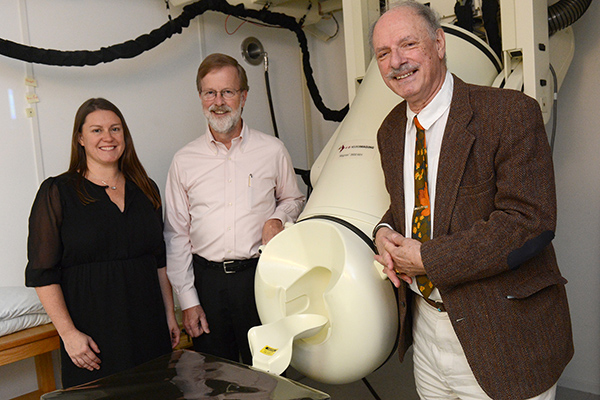
(From left) Drs. Lisa James, Brian Engdahl, and Apostolos Georgopoulos (director) are with the Brain Sciences Center at the Minneapolis VA. They are seen here next to the center's MEG scanner. (Photo by April Eilers
Twenty-five years ago, Brian Zimmerman was a strong 6-foot-1 inch, 185-pound Army infantryman in prime physical condition fighting Iraqi forces in Operation Desert Storm.
He witnessed charred Iraqi bodies on the "Highway of Death," including a dead child, took part in a tank battle, and was close to an Iraqi ammunition depot called Khamisiyah that upon detonation is believed to have released nerve agents such as sarin and cyclosarin in the direction of U.S. troops.
Today, Zimmerman, 45, is still entrenched in a battle, but one worlds apart from his military days. He's one of the estimated 300,000 Veterans with Gulf War illness (GWI), which affects various
Wednesday, November 23, 2016
DOD -- Desert Storm 25 years later: Gulf War veterans recall experiences
SOURCE: U.S. Department of Defense, Defense Video Imagery Distribution System (DVIDS), November 22, 2016, by Maj. Marnee Losurdo
https://www.dvidshub.net/news/215566/desert-storm-25-years-later-gulf-war-veterans-recall-experiences
ARCHIVED ARTICLE:

https://www.dvidshub.net/news/215566/desert-storm-25-years-later-gulf-war-veterans-recall-experiences
ARCHIVED ARTICLE:
Desert Storm 25 years later: Gulf War veterans recall experiences
Photo By Tech. Sgt. Ryan Labadens | Staff Sgt. Ronald Patton, 403rd Operational Support Squadron aircrew flight equipment... read more

KEESLER AIR FORCE BASE, Miss. -- Sunday notes the 25th Anniversary of Operation Desert Storm. U.S. and coalition forces began attacking Iraqi military forces Jan. 17, 1991, to oust them from Kuwait, transitioning operations from Operation Desert Shield to Operation Desert Storm.
More than 500,000 American servicemembers deployed to
More than 500,000 American servicemembers deployed to
Boston University to Participate in CDMRP-Funded Gulf War Study by Dr. Steven Coughlin
..."the grant is intended to help 'obtain a better understanding of mortality, morbidity and symptomatology over time in veterans deployed in the 1990–1991 Persian Gulf War and afflicted by GWI.'" ..."It’s important to understand whether Gulf War Illness manifests differently in women than in men."
Tuesday, November 22, 2016
NYT: ISIS Used Chemical Arms at Least 52 Times in Syria and Iraq, Report Says
SOURCE: New York Times, Nov. 21, 2016, by Eric Schmitt with C.J. Chivers
http://mobile.nytimes.com/
ARCHIVED ARTICLE:
http://mobile.nytimes.com/
ARCHIVED ARTICLE:
Middle East
Friday, November 18, 2016
SCIENCE DAILY: Studies point to gene-based brain glitches in ill Gulf War vets
SOURCE: Science Daily, by Veterans Affairs Research Communications, November 17, 2016
ARCHIVED ARTICLE:
Studies point to gene-based brain glitches in ill Gulf War vets
Researchers use MEG brain scans to track differences
Thursday, November 10, 2016
NSU Scientists Study Disease that Impacts Hundreds of Thousands of Gulf War Veterans
PRESS RELEASE - FOR IMMEDIATE RELEASE
Nova Southeastern University Scientists Study Disease that Impacts Hundreds of Thousands of Gulf War Veterans
Tuesday, October 25, 2016
New Study Links Chemical Alarms to Negative Brain Changes
(91outcomes.com) - Newly released study results suggest that 1991 Gulf War exposures that triggered chemical alarms damaged veterans' brain structure and function.
The study results, published this month in the peer-reviewed Journal of Occupational and Environmental Medicine, looked at 1991 Gulf War veterans' self-reports of hearing chemical alarms going off during the war. Previous estimates have suggested chemical alarms sounded tens of thousands of times across the Gulf War theater of operations during the six-week war to oust Iraqi military occupying forces from Kuwait.
A pair of studies in 2012 by Dr.'s James Haley and James Tuite provided new evidence that supports that chemical plumes from destroyed Iraqi chemical warfare production and storage facilities drifted down over and exposed large numbers of Gulf War troops to low-levels of sarin, mustard, and other Iraqi chemical warfare agents.
The study results, published this month in the peer-reviewed Journal of Occupational and Environmental Medicine, looked at 1991 Gulf War veterans' self-reports of hearing chemical alarms going off during the war. Previous estimates have suggested chemical alarms sounded tens of thousands of times across the Gulf War theater of operations during the six-week war to oust Iraqi military occupying forces from Kuwait.
A pair of studies in 2012 by Dr.'s James Haley and James Tuite provided new evidence that supports that chemical plumes from destroyed Iraqi chemical warfare production and storage facilities drifted down over and exposed large numbers of Gulf War troops to low-levels of sarin, mustard, and other Iraqi chemical warfare agents.
Friday, October 21, 2016
CDMRP Publicizes New Resources, including Gulf War Illness "Landscape"
(91outcomes.com) - Two significant new publicly available resources have been developed and publicly released by the Gulf War Illness Research Program (GWIRP), part of the U.S. Department of Defense Congressionally Directed Medical Research Programs (CDMRP).
The Gulf War Illness Landscape
The first new GWIRP public resource, just released today, is the GWIRP's "landscape" of Gulf War illness (GWI) research. The GWIRP prepared this Landscape as an overview of what is currently known about topics consistent with the GWIRP's integrated, three-part, Congressionally-directed mission: identifying GWI treatments; improving the definition and diagnosis of GWI; and, understanding GWI's pathobiology and symptoms.
Tuesday, October 18, 2016
STARS & STRIPES: VA extends deadline 5 more years for seeking Gulf War illness benefits
SOURCE: Stars and Stripes, October 17, 2016, Nikii Wentling reporting
http://www.stripes.com/news/va-extends-deadline-for-seeking-gulf-war-illness-benefits-to-2021-1.434547
ARCHIVED ARTICLE:
http://www.stripes.com/news/va-extends-deadline-for-seeking-gulf-war-illness-benefits-to-2021-1.434547
ARCHIVED ARTICLE:
VA extends deadline for seeking Gulf War illness benefits to 2021
Wednesday, October 5, 2016
CDMRP-Funded Study Testing 9 Treatments for Gulf War Illness
(91outcomes.com) - A new study funded by the Congressionally Directed Medical Research Program (CDMRP) is testing nine different treatments in veterans with Gulf War Illness.
The study, Treating Gulf War Illness with Novel Anti-Inflammatories: A Screening of Botanical Microglia Modulators, is being led by Dr. Jarred Younger of the University of Alabama at Birmingham. During the course of the study, investigators will test the treatment viability of each of the nine plant-based treatments -- three in each veteran participant.
The study, Treating Gulf War Illness with Novel Anti-Inflammatories: A Screening of Botanical Microglia Modulators, is being led by Dr. Jarred Younger of the University of Alabama at Birmingham. During the course of the study, investigators will test the treatment viability of each of the nine plant-based treatments -- three in each veteran participant.
Friday, September 30, 2016
CDMRP-Funded Study Finds 3 Blood Biomarkers of Gulf War Illness, Advances Toward Treatments
(91outcomes.com) - A Minnesota researcher has identified three "readily measurable" biomarkers in the blood of 1991 Gulf War veterans suffering from Gulf War Illness that may help enhance the current case definition for the disease and aid in treatment trials.
Supported by a U.S. Department of Defense (DoD) research grant, Dr. Ronald Bach of the Minneapolis VA Medical Center and his research team identified the biomarkers, which include specific changes in lymphocytes, monocytes, and C reactive protein. Additionally, "Lymphocyte, monocyte, neutrophil, and platelet counts were higher in GWI subjects. Six serum proteins associated with inflammation were significantly different in GWI subjects."
Supported by a U.S. Department of Defense (DoD) research grant, Dr. Ronald Bach of the Minneapolis VA Medical Center and his research team identified the biomarkers, which include specific changes in lymphocytes, monocytes, and C reactive protein. Additionally, "Lymphocyte, monocyte, neutrophil, and platelet counts were higher in GWI subjects. Six serum proteins associated with inflammation were significantly different in GWI subjects."
CDMRP-Funded Study Finds 3 Blood Biomarkers of Gulf War Illness, Advances Toward Treatments
(91outcomes.com) - A Minnesota researcher has identified three "readily measurable" biomarkers in the blood of 1991 Gulf War veterans suffering from Gulf War Illness that may help enhance the current case definition for the disease and aid in treatment trials.
Wednesday, September 28, 2016
VA Study Confirms Worse Sleep Quality, Higher Sleep Apnea Risk in Gulf War Illness
(91outcomes.com) - A new study by the U.S. Department of Veterans Affairs (VA) shows that veterans suffering from Gulf War Illness (GWI) have greater risk for obstructive sleep apnea than similar veterans without the debilitating condition.
The study, led by longstanding VA GWI researcher Dr. Linda Chao, also found that veterans with GWI had significantly greater severity of insomnia and worse sleep quality.
Interestingly, the study found a close correlation between insomnia and severity and GWI status.
CDMRP Study Confirms, Builds on Previous Findings that Gulf War Toxins Lead to Long-Term Brain Inflammation
(91outcomes.com) - A study funded by a federal medical research program aimed at developing treatments for Gulf War Illness has found new insight into possible treatment pathways for the debilitating condition that affects as many as one-third of the veterans of the 1991 Gulf War.
The study also confirmed previous findings of persistent neurological inflammation in a mouse model following Gulf War toxic exposures.
Most notably, according to the study's findings, "the persistent neuroinflammation evident in our model presents a platform with which to identify novel biological pathways, correlating with emergent outcomes that may be amenable to therapeutic targeting. Furthermore, in this work we confirmed our previous findings that GW [Gulf War] agent exposure causes neuropathological changes....
The study also confirmed previous findings of persistent neurological inflammation in a mouse model following Gulf War toxic exposures.
Most notably, according to the study's findings, "the persistent neuroinflammation evident in our model presents a platform with which to identify novel biological pathways, correlating with emergent outcomes that may be amenable to therapeutic targeting. Furthermore, in this work we confirmed our previous findings that GW [Gulf War] agent exposure causes neuropathological changes....
Thursday, September 22, 2016
Subscribe to:
Posts (Atom)